Description
Eyelid Lift (blepharoplasty) is a surgical procedure performed to improve the appearance of the upper and/or lower eyelids. Excessive skin, fat, and muscle are removed with the goal of more youthful and less tired-appearing eyes.
Eyelid Lift Before and After Photos
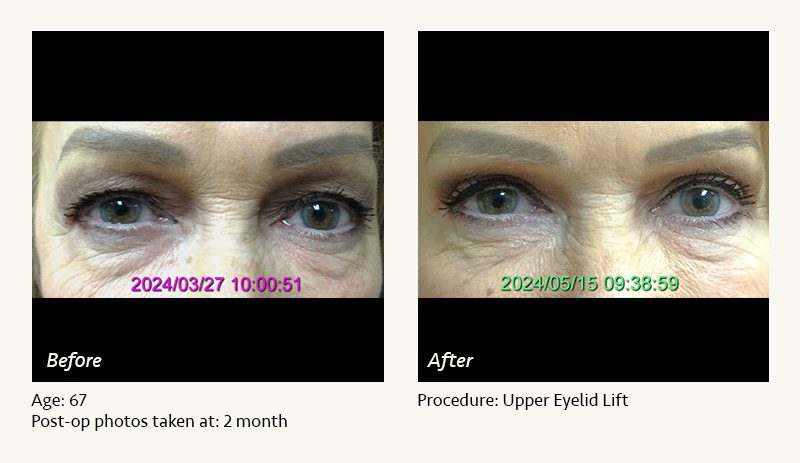
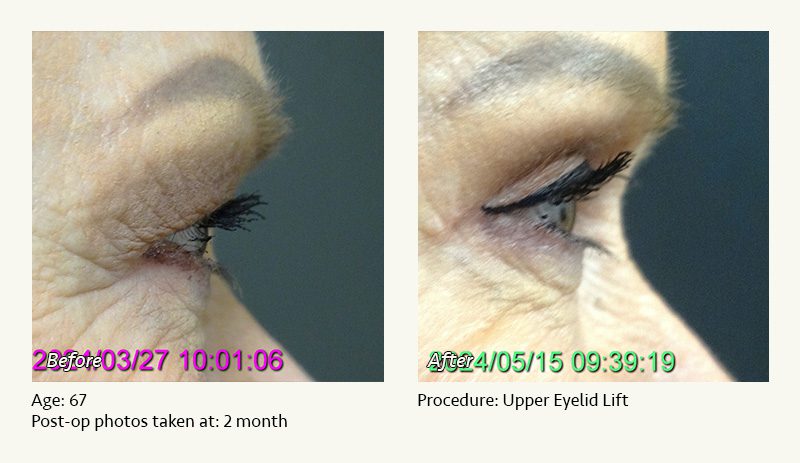
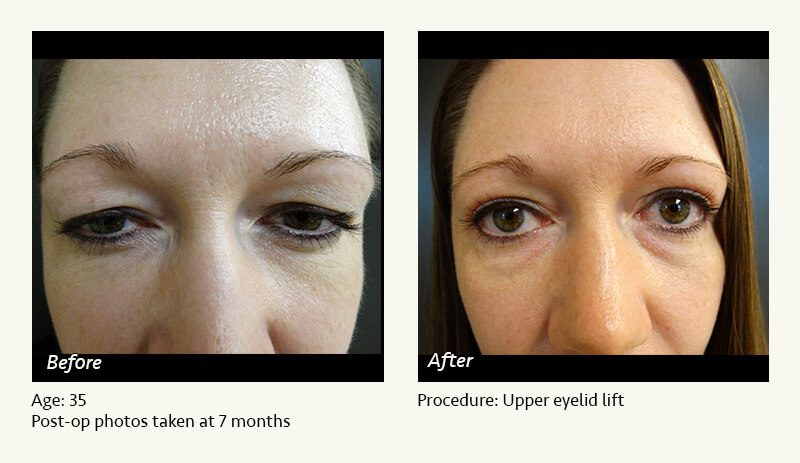
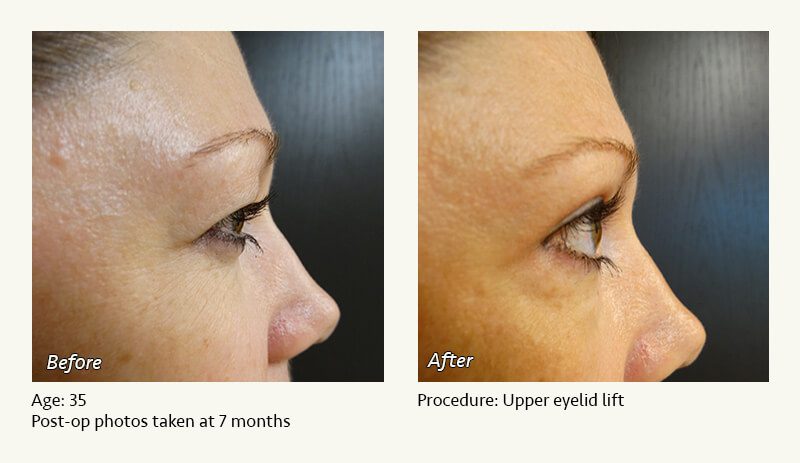
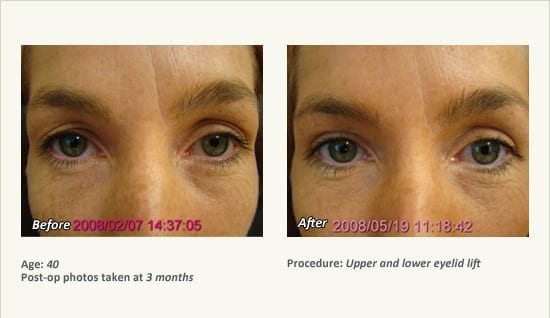
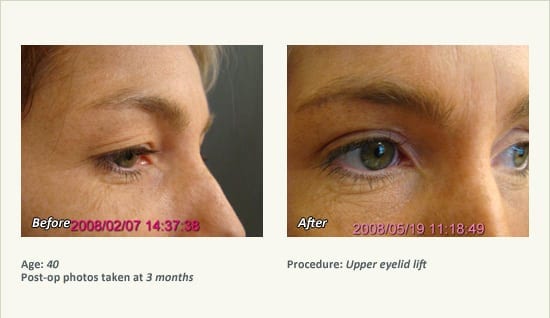
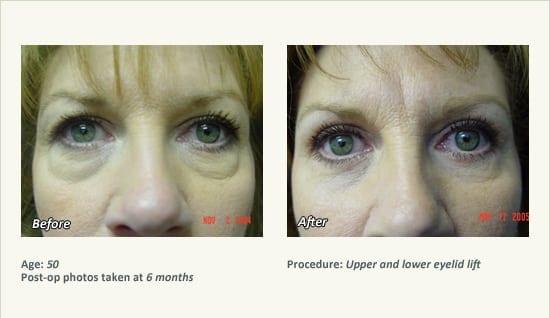
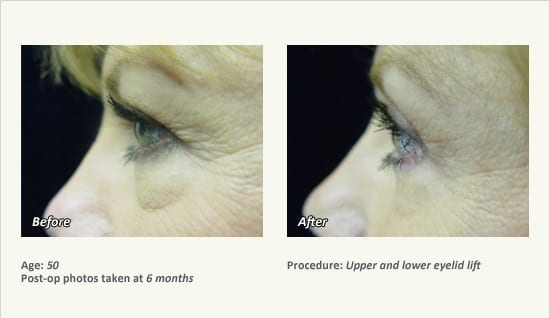
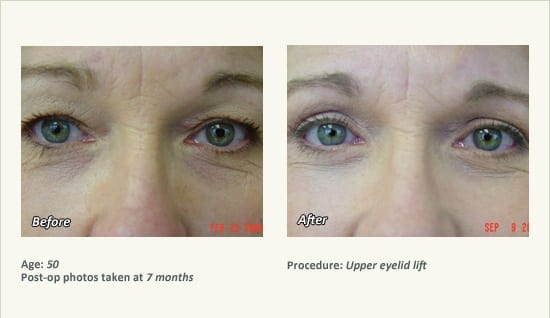
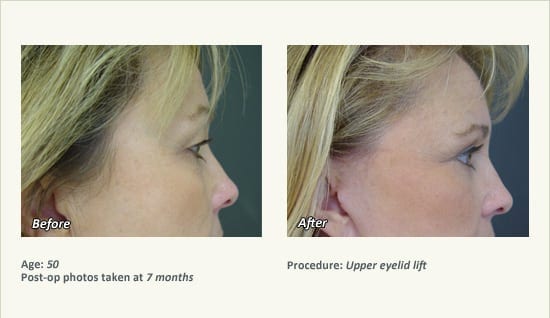
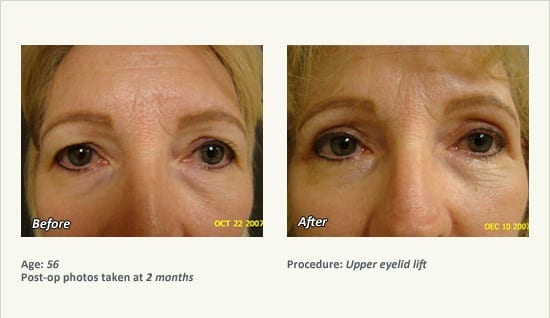
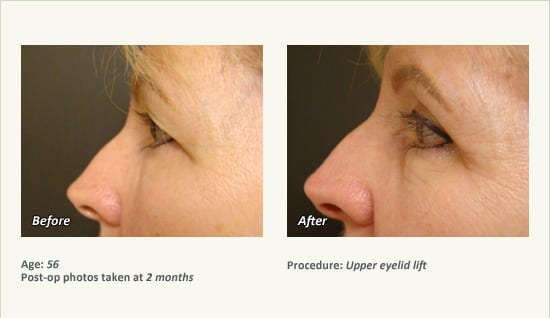
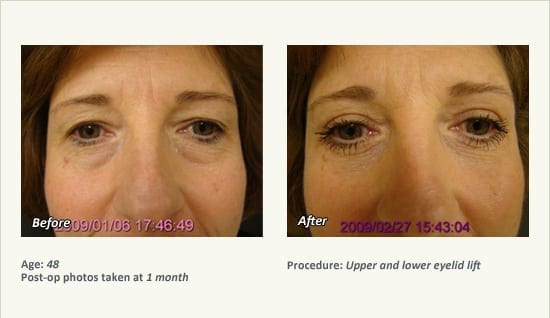
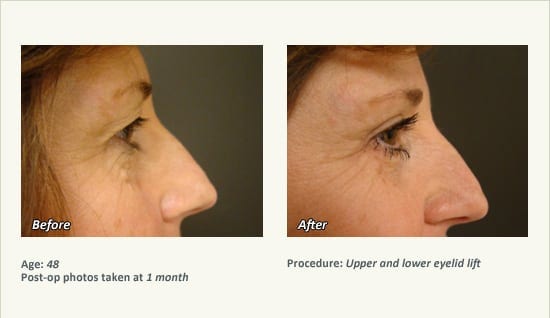
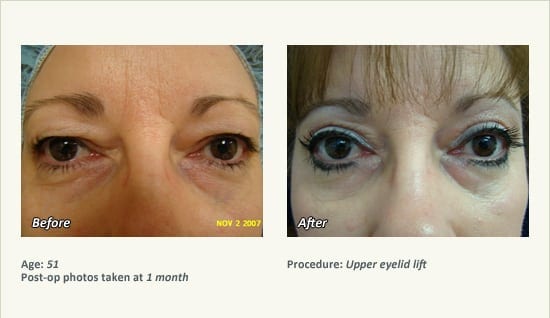
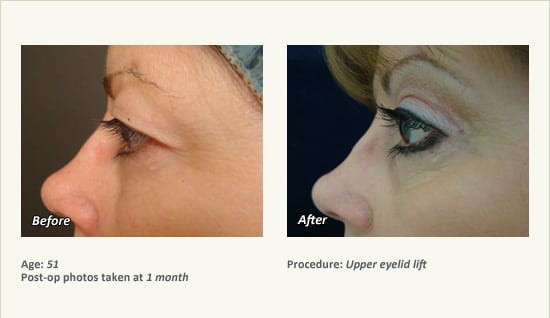
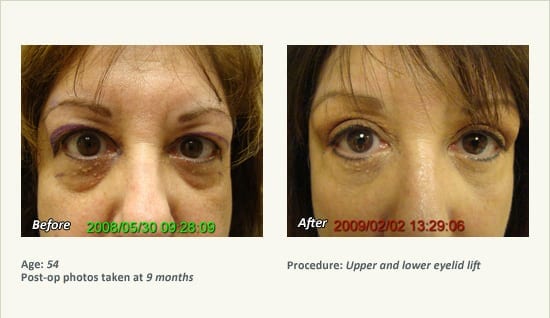
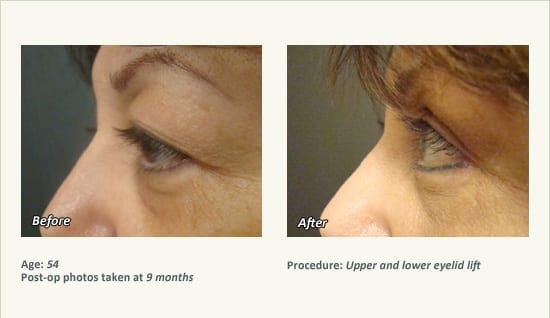
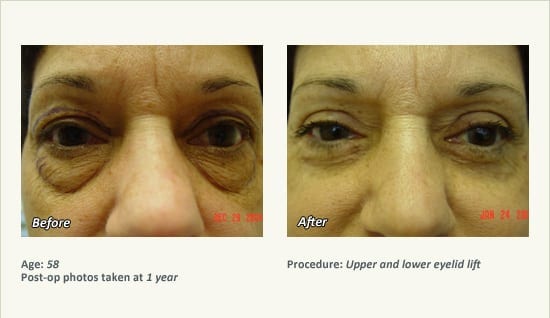
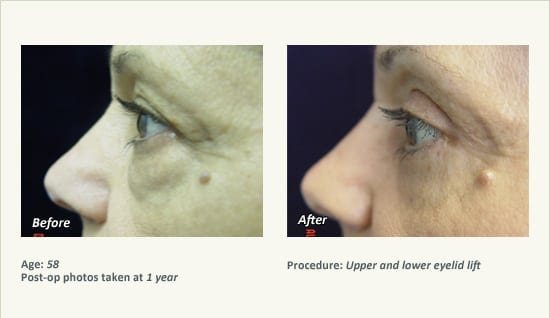
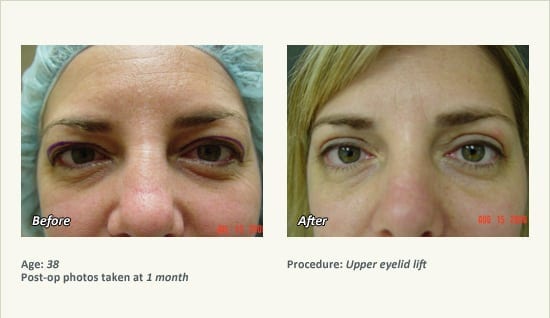
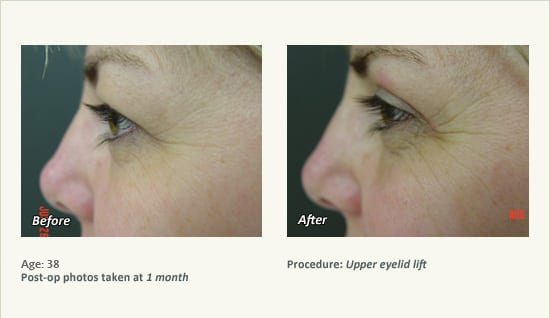
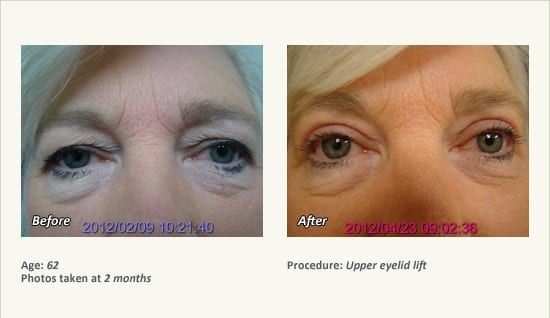
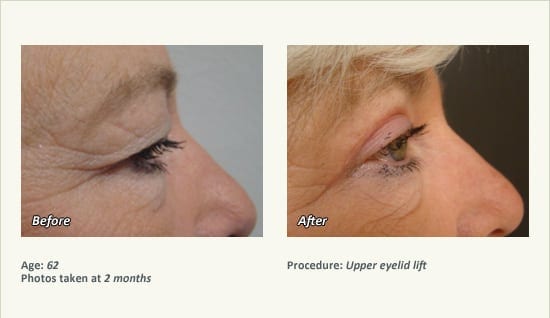
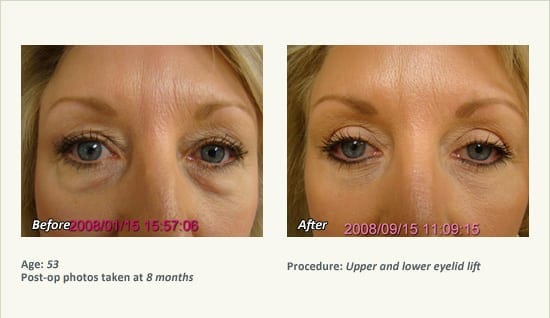
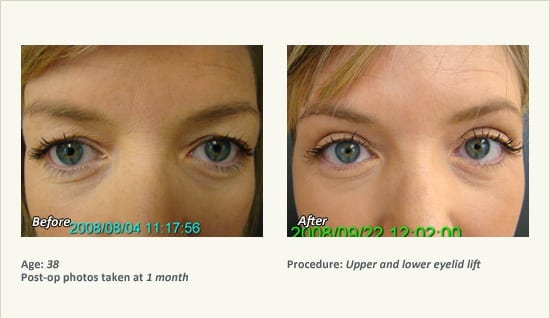
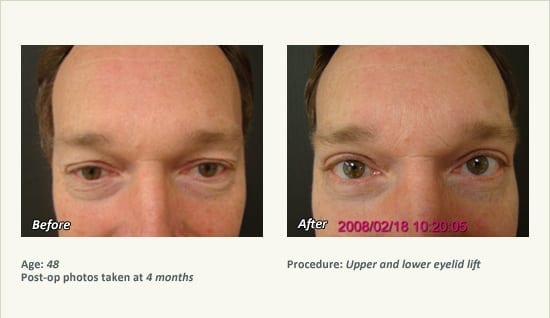
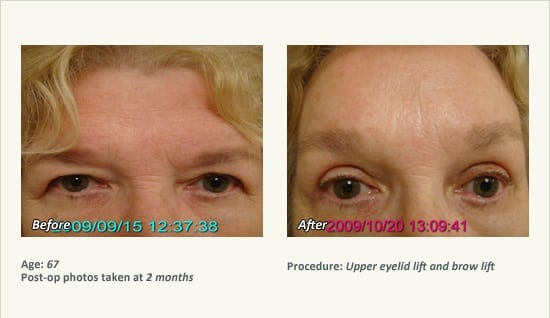
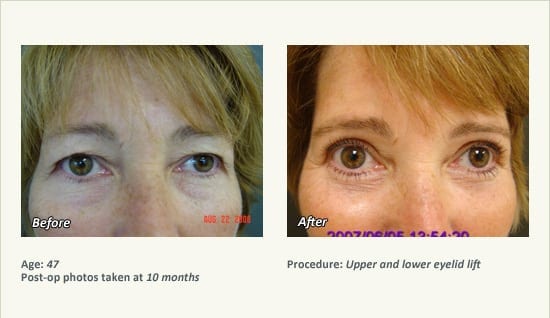
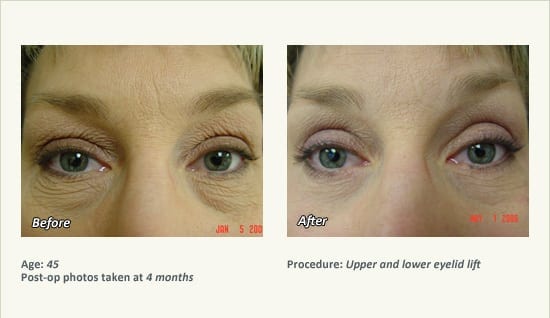
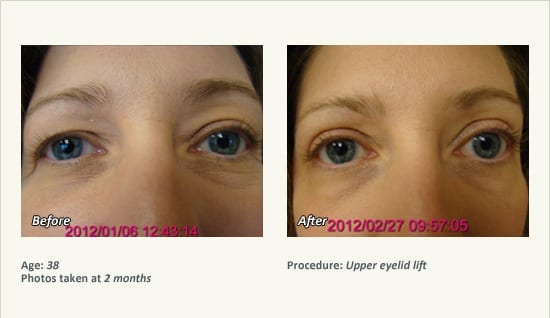
What will upper eyelid surgery do?
- Reduce “hooding” or excessive skin, especially along the outer aspect of the eyelid.
- Reduce bulging fat along the inner aspect of the eyelid.
- Reduce the feeling of eyelid heaviness.
- Provide a “fresher” appearance, making it easier to apply upper eyelid make-up.
- Improve vision (if excessive skin is blocking your upper visual field).
What will upper eyelid surgery NOT do?
- Elevate the eyebrows. Brow elevation may be obtained by a chemical brow lift with Botox or Dysport or a surgical browlift.
- Improve crow’s feet wrinkles or wrinkles between the eyes (the 11’s), which are best addressed by Botox or Dysport.
What will lower eyelid surgery do?
- Reduce fat “bags” beneath the eyes.
- Reduce lower eyelid skin excess.
- Fill the nasojugal grooves or “tear troughs” via transfer of fat from areas of bulging to areas of deficiency.
What will lower eyelid surgery NOT do?
- Improve fine line wrinkles of the lower eyelids. These are best addressed by skin care products, microdermabrasion, and other resurfacing procedures.
- Eliminate dark circles beneath the eyes. The appearance of dark circles may be reduced–but will not be eliminated–by redistribution of lower eyelid fat.
- Lift sagging cheeks, which are best addressed by facelift. Injection of facial fillers, such as Restylane or Juvederm, may also fill soft tissue deficiencies along or adjacent to the lower eyelids.
Dr. Friedman performs cosmetic eyelid surgery under general anesthesia or intravenous sedation on an outpatient basis. The procedures are performed in his AAAASF-accredited surgical facility, the West Plano Plastic Surgery Center, which is located on the campus of Texas Health Presbyterian Hospital of Plano, Texas. He strictly uses physicians—not nurses or technicians—to administer your anesthesia.
Dr. Friedman attempts to hide the upper blepharoplasty incisions in the natural eyelid crease. He places the lower blepharoplasty incisions just beneath the eyelashes. The scars are generally fine line and inconspicuous.
Eyelid surgery recovery involves ice packs and elevation of the head. Pain is usually mild and well-controlled with prescription medication. Most patients return to light activities within 3 to 5 days. Stitches are removed about 5 days after surgery. Bruising resolves in about 2 weeks. Some patients experience initial irritation of the eyes, particularly with lower eyelid surgery. Heavy straining should be avoided for about 4 weeks.
When you visit our office in Plano, Texas, Dr. Friedman will discuss your specific concerns. He will outline the available procedures and will help you decide which one(s) may be most appropriate for you. We will also discuss costs and show you a variety of before and after pictures of eyelid lifts performed by Dr. Friedman. If you wish to speak to other patients who have undergone eyelid surgery, we will be happy to provide phone numbers.
Q & A: Eyelid Lift
-
Does eyelid surgery hurt?
All surgeries hurt to some degree. However, most patients undergoing eyelid surgery describe very little pain. The most common early postoperative complaints are eye irritation, tearing, and/or dryness.
-
Will other people notice my scars after eyelid surgery?
The upper eyelid scar is generally concealed within the upper eyelid crease. The lower eyelid scar is concealed just under the eyelashes. The thin skin and good blood flow to these tissues usually results in fine-line and inconspicuous scars.
-
Will eyelid surgery get rid of crow’s feet or dark circles under my eyes?
Eyelid surgery will reduce or eliminate bulging fat and excess skin from the eyelids. Frequently, this will reduce shadowing of the lower eyelids. However, darker skin pigmentation in the lower lids will not be improved by this procedure. Similarly, crows’ feet are best addressed by Botox injection.
-
How do I know whether I need a brow lift?
A brow lift may be useful if you notice that your eyebrows look much better when you are actively raising them. In most people, aging of the brows occurs faster along the outer aspects than the inner aspects. If a brow lift is performed, Dr. Friedman recommends a conservative procedure. He knows that no one wants to look surprised.
If you are happy with your brow position, you may wish to restrict your surgery to the upper eyelids. As an alternative to surgery, Botox injections may be tailored to provide a (temporary) mild chemical brow lift.
-
What is the usual age for eyelid surgery?
Most patients undergoing eyelid surgery in Texas are in their late 30’s to 60’s. Dr. Friedman feels that there is no “right” time for surgery. Instead, if you are seeing changes that bother you sufficiently to warrant surgery, then surgery may be a reasonable option. However, Dr. Friedman recommends against “preventative” or “prophylactic” surgery. If you’re not ready for surgery, Botox or skin care treatments may be reasonable alternatives.
Eyelid Lift: Instructions
One week before surgery
- Do not take aspirin-containing products, as these may increase your risk of bleeding. Use extra-strength Tylenol for any headaches or other minor pains.
- Please notify Dr. Friedman’s staff if you become sick with a fever, significant cough, etc. If necessary, your surgery can be rescheduled to a time when you are feeling better.
- Do not smoke at all or use a nicotine patch for at least two weeks (and preferably 4 weeks) prior to surgery and 4 weeks after surgery. Smoking interferes with wound healing and increases your risk for anesthetic and surgical complications.
- Arrange to have a relative or friend drive you home after surgery and stay with you for the evening. You cannot drive yourself home.
The evening before surgery:
- Do not eat or drink anything for at least 8 hours prior to your scheduled surgery time.
- Make some jello and/or soup for after surgery. Have some juice in your refrigerator.
- The anesthesiologist will contact you by phone to discuss your medical history and to answer any questions.
Day of surgery: before you leave home
- Remember not to eat, drink, or smoke. This includes no chewing gum, mints, etc.
- Make sure someone is available to drive you home. Put a pillow and blanket in the car.
- Wear loose, comfortable clothing. Avoid heavy make-up, jewelry, or contact lenses. Please do not use any lotion, baby oil, perfume or powder. LEAVE ALL VALUABLES AT HOME!
Day of surgery: at the facility before surgery
- Dr. Friedman will talk to you before surgery to answer any last-minute questions. He will place drawings on your eyelids to help him accurately plan your surgery.
- You will meet the anesthesiologist and surgical nurses.
Day of surgery: at the facility after surgery
- You will be taken to the recovery area to wake up after surgery. Dr. Friedman will go to the waiting room to speak to your family/friends.
- Approximately 1 hour later, your family can visit you. Once you are feeling well enough, you may go home.
At home after surgery:
- Have someone stay with you for the first night. You may be weak and drowsy.
- Take the antibiotics, steroid medication (to decrease swelling), pain medication (as needed), and anti- nausea medicine (if needed) that Dr. Friedman has prescribed for you.
- Keep your head elevated at all times. Sleep on your back (not your stomach or side).
- Gently rinse your eyes with “natural tears” (saline solution) as needed. Apply the antibiotic ointment prescribed by Dr. Friedman 2 to 3 times daily. Place the ointment in your eyes at night before going to bed. Do not use over-the-counter ointment, as it may burn your eyes.
- Keep an ice pack or frozen peas over your eyes intermittently for the first 24 hours after surgery.
- Avoid lifting, pushing, pulling greater than 5 pounds. Avoid straining.
- You may wear glasses as needed. Avoid contact lenses for 10 days after surgery.
- Take at least 10 deep breaths every hour. This will help keep your lungs expanded.
- Do not be a couch potato. To reduce the risk of blood clots in the legs, have someone help you to get up and walk anytime you need to eat or use the bathroom. While you are in bed, repeatedly flex your ankles (moving your toes up and then down) and/or have your family massage your calves.
- If you experience a prolonged fever (oral temperature greater than 101), contact Dr. Friedman.
- Your vision may be slightly blurry, and you may have difficulty closing your eyes completely. If your vision becomes worse, contact Dr. Friedman immediately. Feel free to call our office or to page Dr. Friedman for any other problems or concerns.
Instructions for your first postoperative visit (about one week after surgery)
- Activity level
1 week after surgery: you may resume casual walking but must not engage in vigorous exercise that increases your blood pressure or heart rate. You may resume driving once you are off of your pain medication and can see clearly. Avoid freeways until you are comfortable with city driving.3 weeks after surgery: you may gradually resume regular exercise. - Sleeping position
Please sleep with your head elevated. You may sleep on your back or part way over (pillow under your shoulder and hip). Do not sleep on your side until about 3 weeks after surgery. - Incision care
The stitches will be removed. You will continue use of Bacitracin ophthalmic antibiotic ointment over your incisions twice daily for about 3 more days. You may continue to have some slight blurring of vision and difficulty completely closing your eyes. If so, continue using natural tears (available over-the-counter) to keep your eyes moist. About 3 days after the stitches are removed, you may begin scar massage with Mederma, Vitamin E, or Aloe Vera twice daily. Continue scar massage for about 3 months. - Massage
You should begin gentle massage to the eyelids one week after surgery. This will help smooth any irregularities and areas of firmness. You may apply lotion to your hand to massage and/or you may use a vibrating massager. Massage the lower eyelids in an upward and outward direction (as if you are pushing up the outer corners of your eyelids). - Water exposure
You may begin light showers but should avoid scrubbing your incisions. Avoid immersing your face in a pool, lake, or ocean for 4 weeks. - Medications
One week after surgery, you may resume use of any medications or supplements that you discontinued prior to surgery. However, for at least 3 weeks, you should avoid Motrin, aspirin, and any other product that may thin your blood. - Smoking
Do not smoke for at least one month (and preferably much longer) after surgery. Smoking may increase your risk of infection, lung problems following anesthesia, and wound healing problems. - Sex
You may resume intercourse about 3 weeks after surgery. - Makeup
You may begin use of makeup one week after surgery. Sunglasses or a camouflage makeup (available at most department stores) may be helpful to hide bruises. Do not place makeup directly over your incisions until 3 days after the stitches are removed.
Please feel free to ask Dr. Friedman or his staff about any additional questions or concerns.