Tummy Tuck in Plano, TX
“I can’t say enough good things about Dr. Friedman. He is a phenomenal surgeon who genuinely cares about his patients.”
- Plano, Texas Patient: Jess
Tummy Tuck (abdominoplasty) is a surgical procedure performed to improve abdominal contour in one or more of the following ways:
- To reduce lower abdominal skin laxity, stretch marks, and overhanging skin.
- To reduce excessive abdominal wall fat.
- To tighten abdominal wall laxity resulting from pregnancy and weight loss.
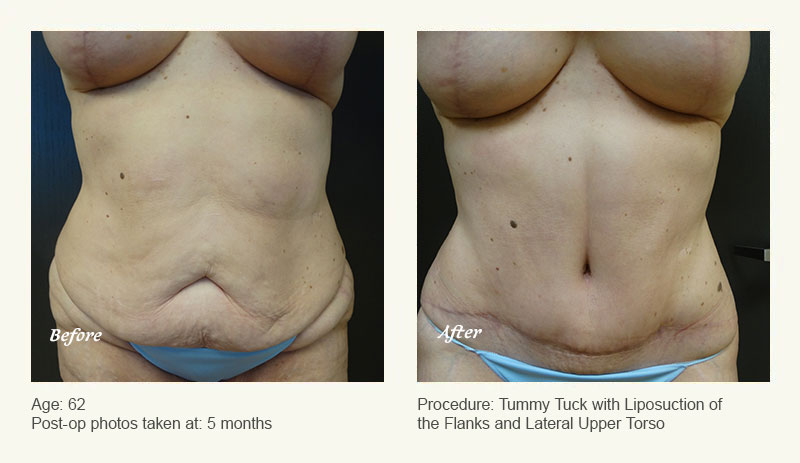
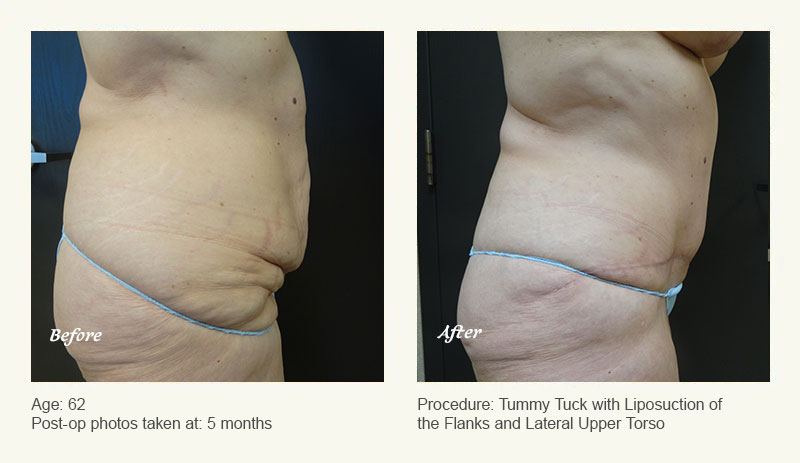
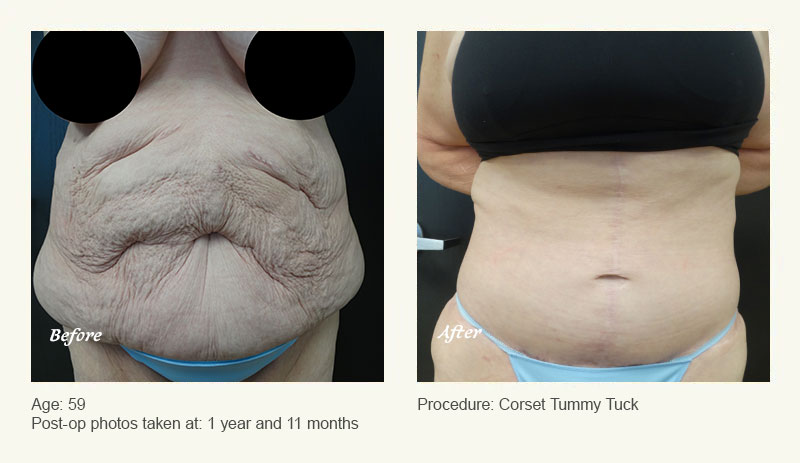
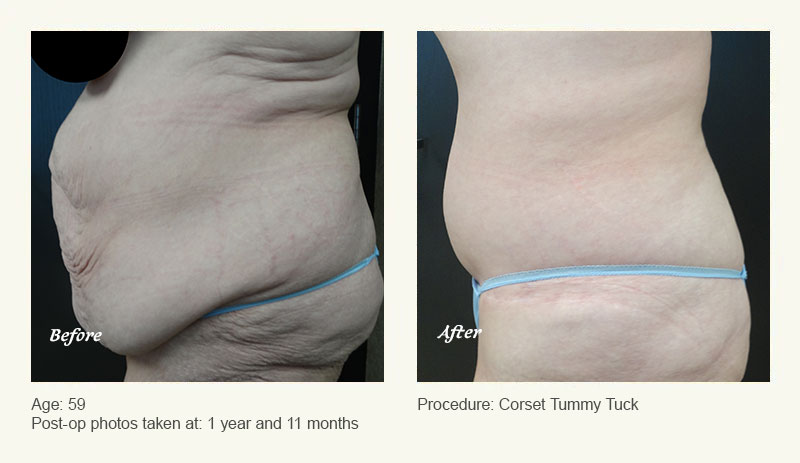
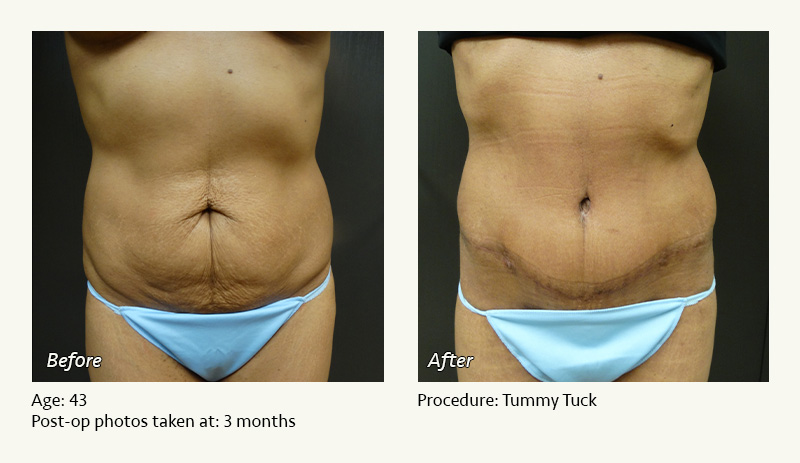
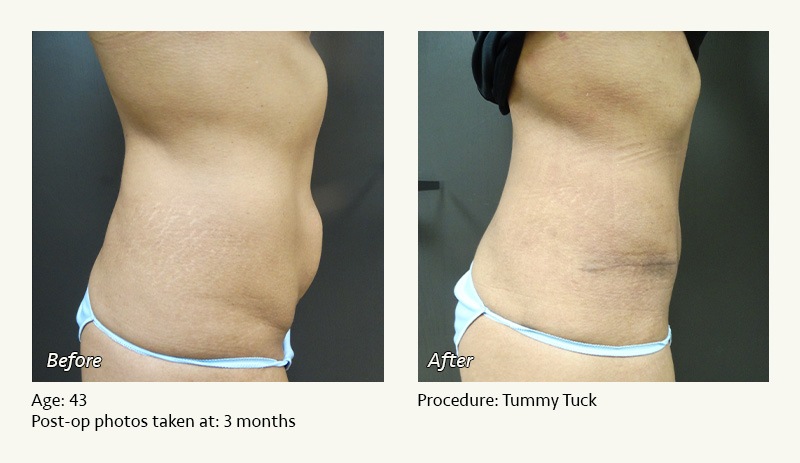


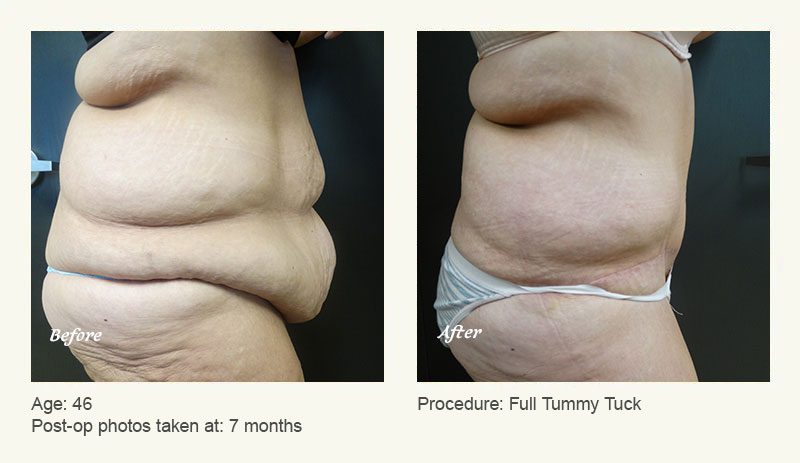
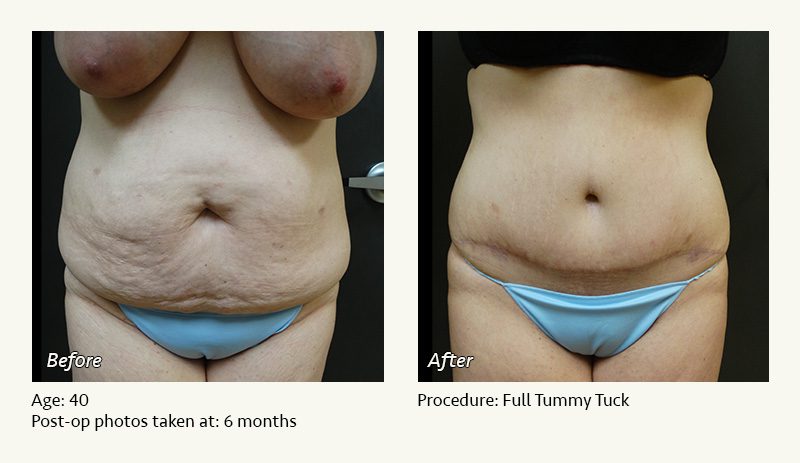

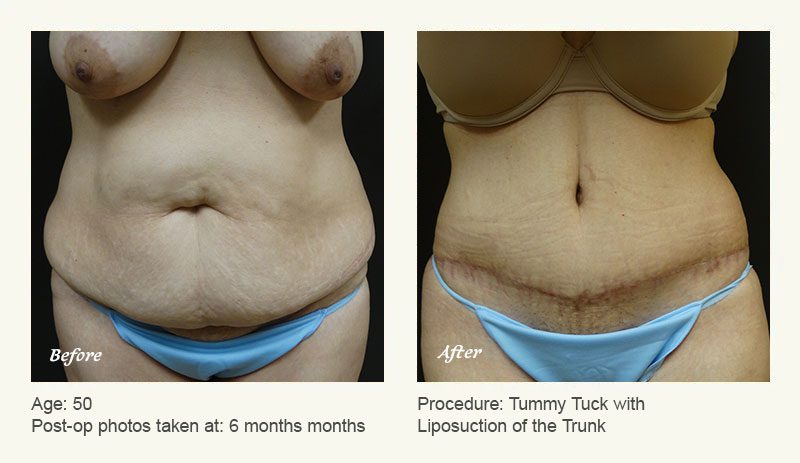

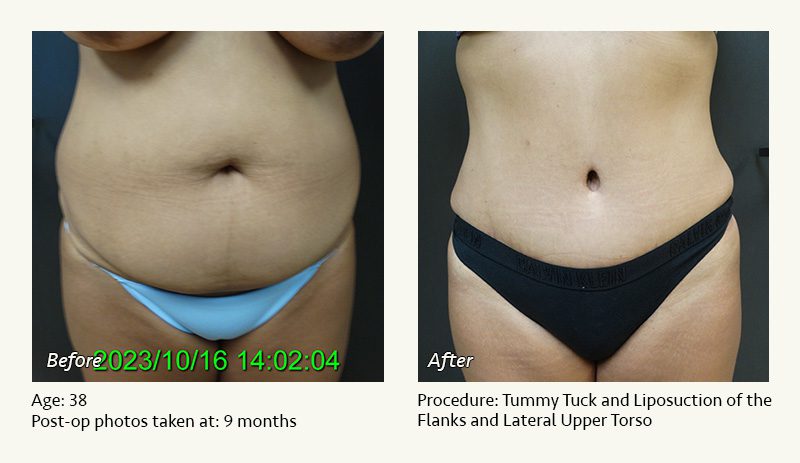
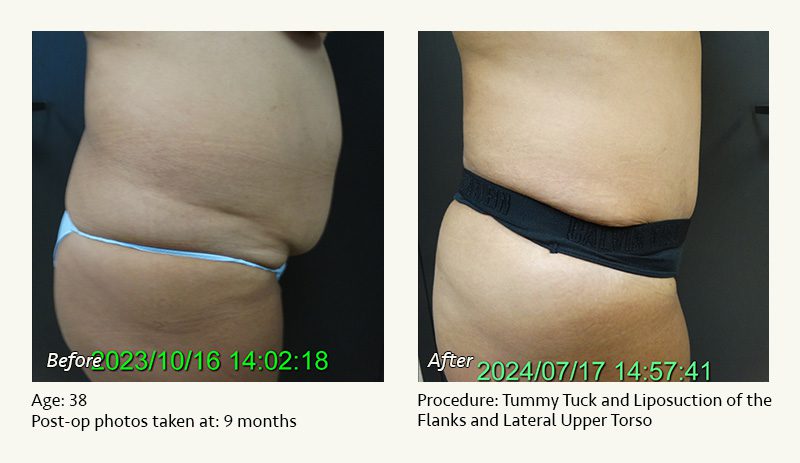
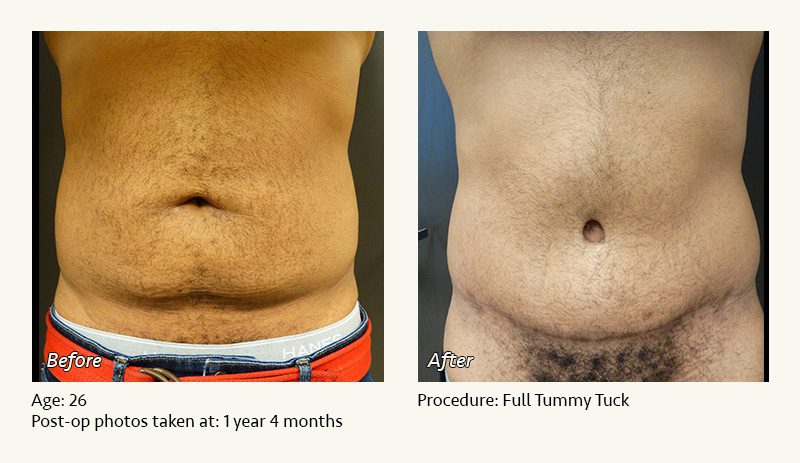

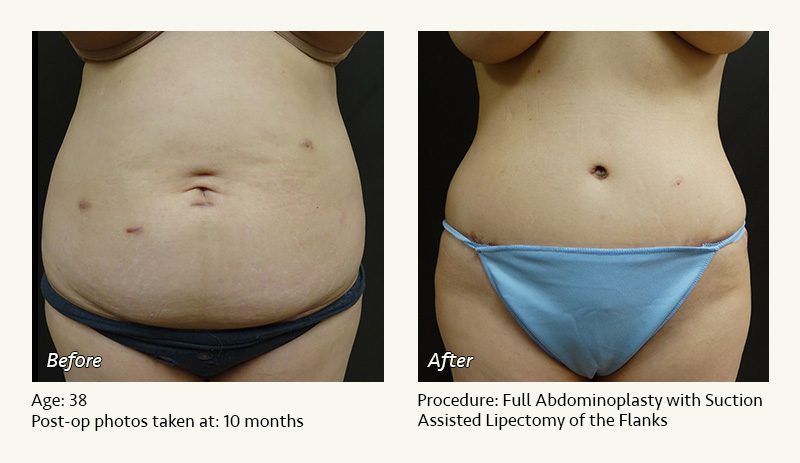

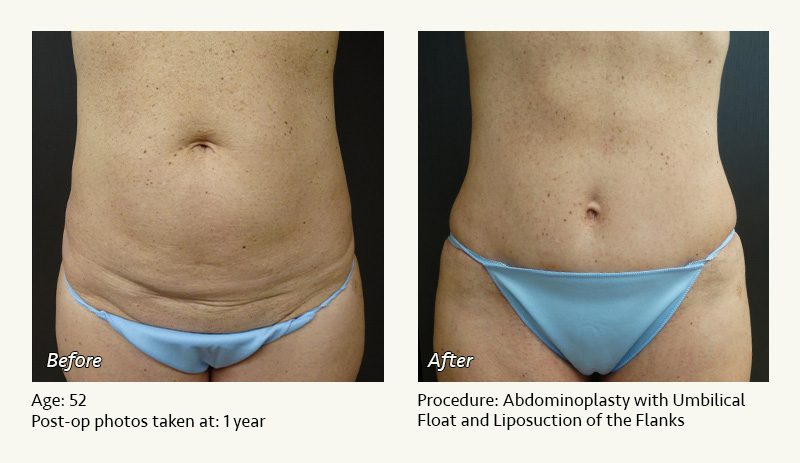

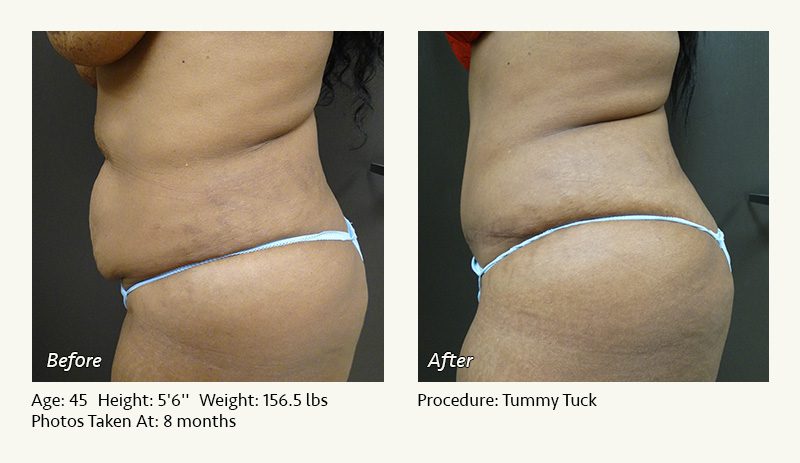
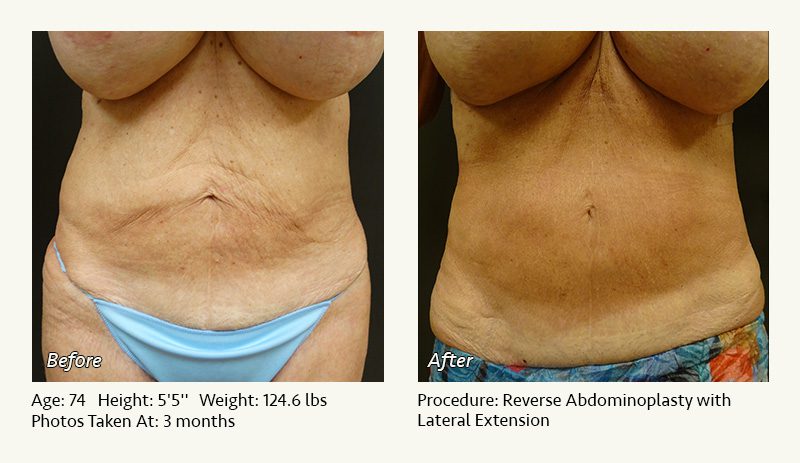
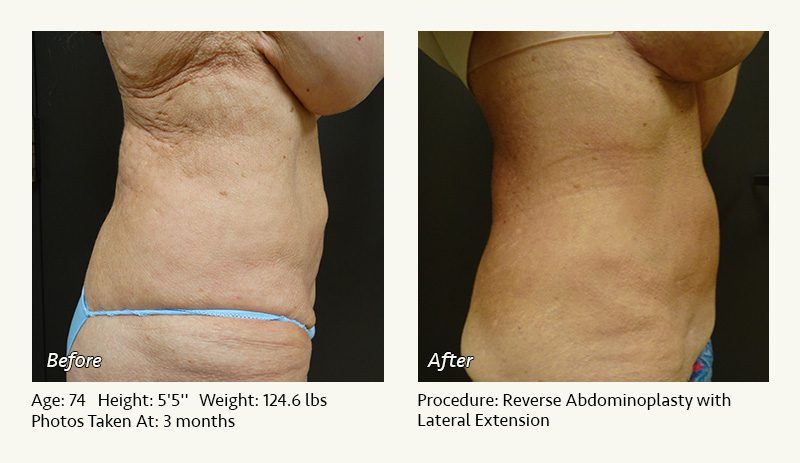
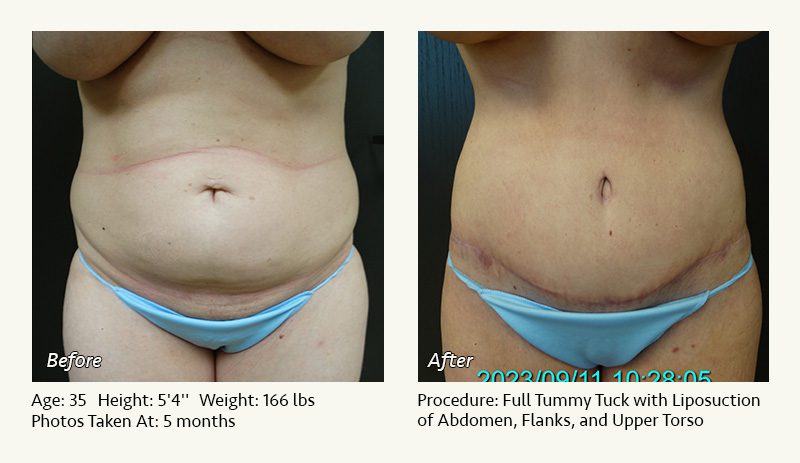
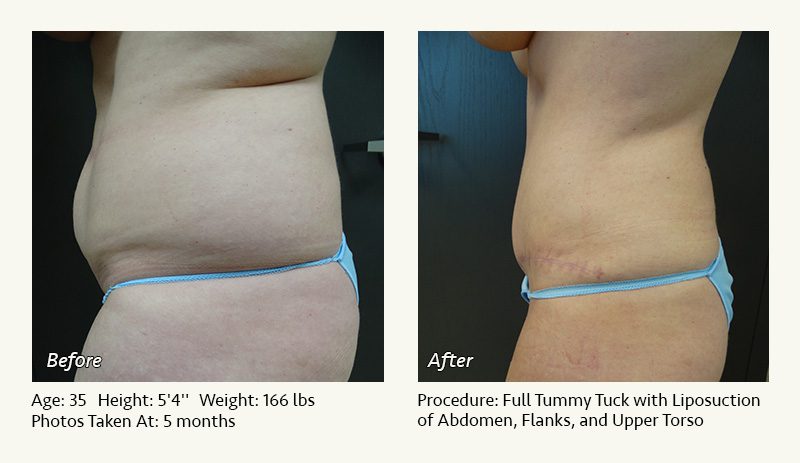
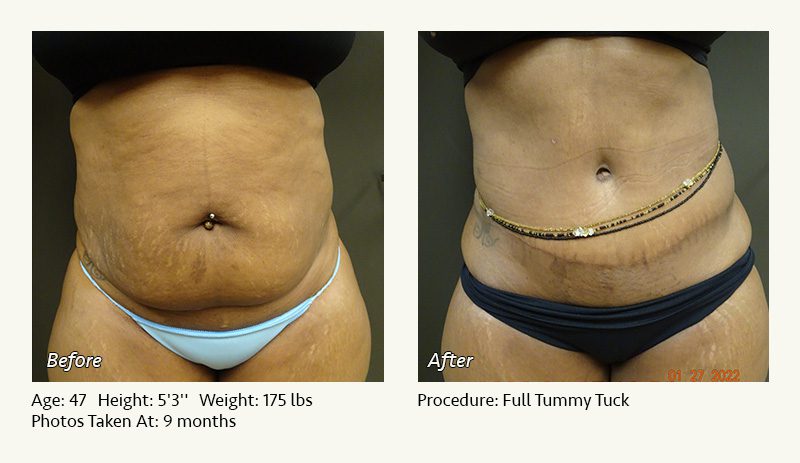
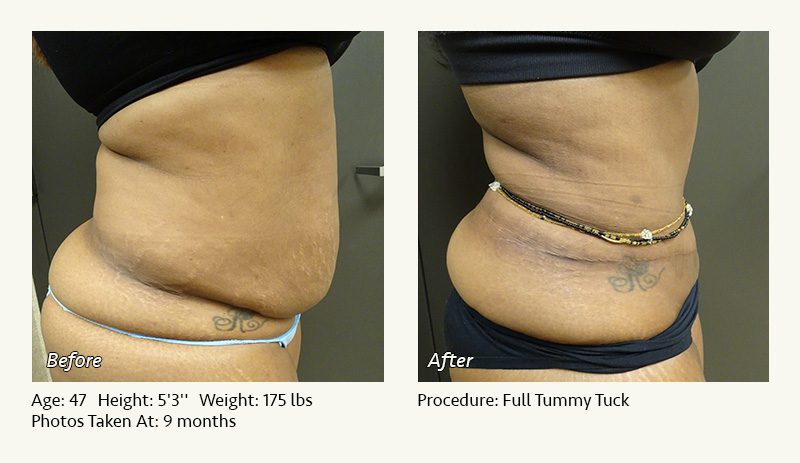
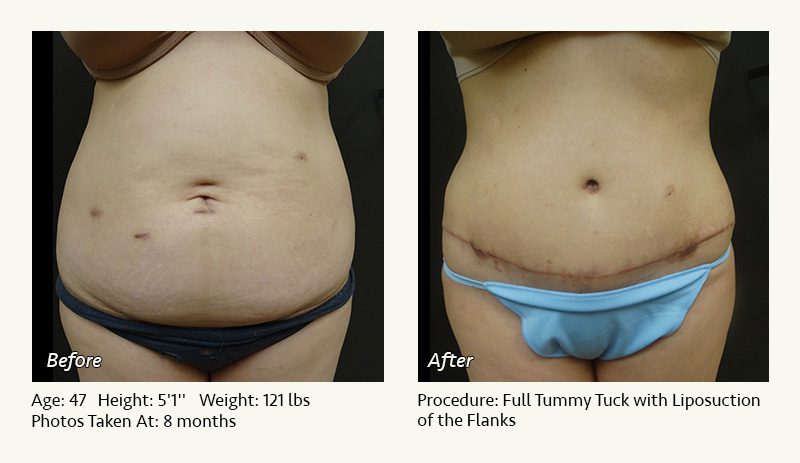
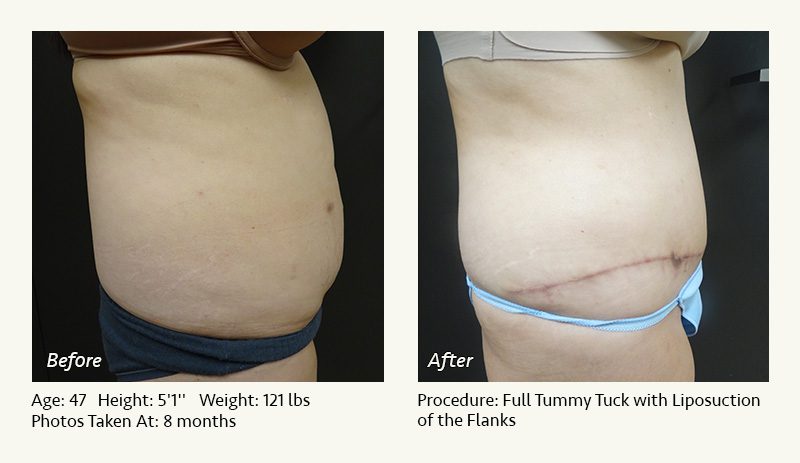
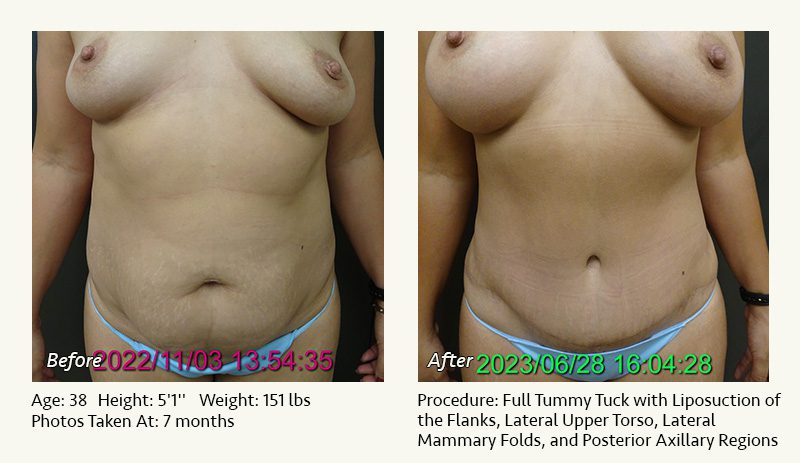
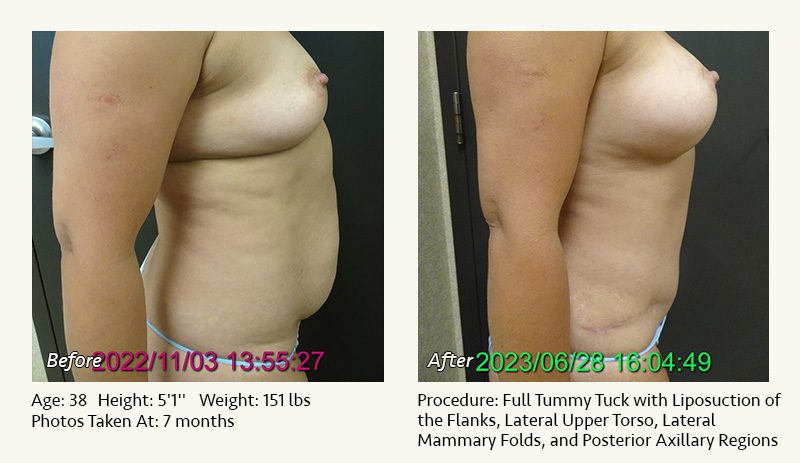
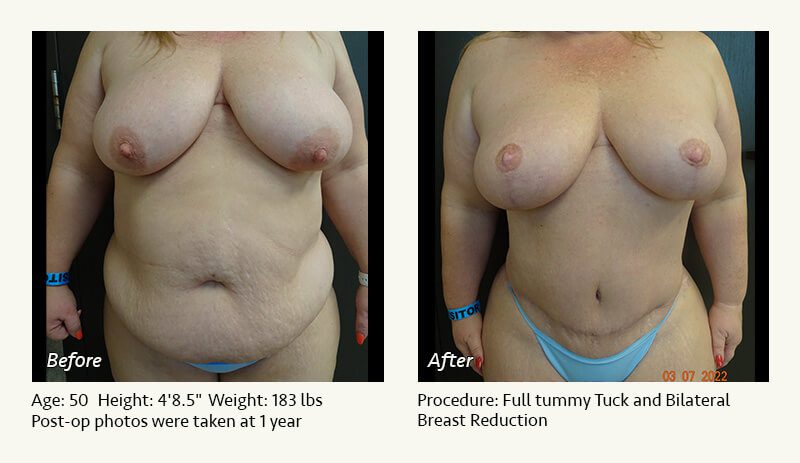
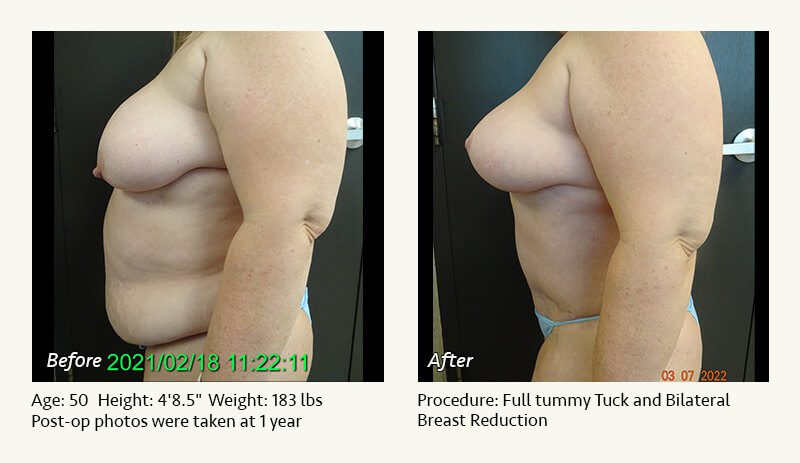
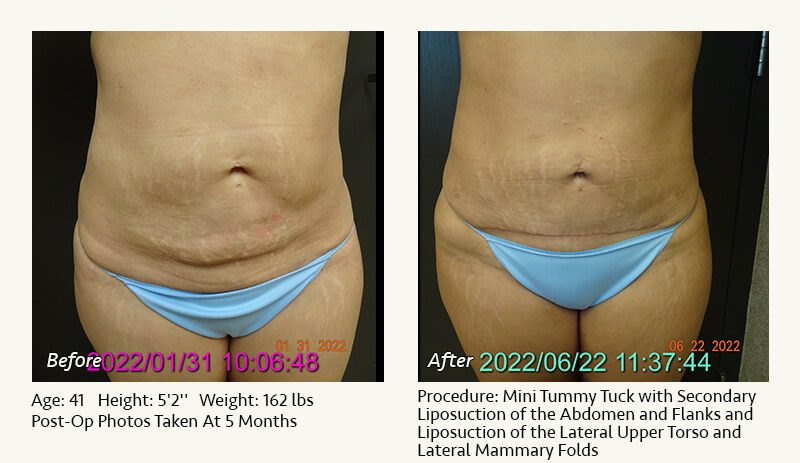
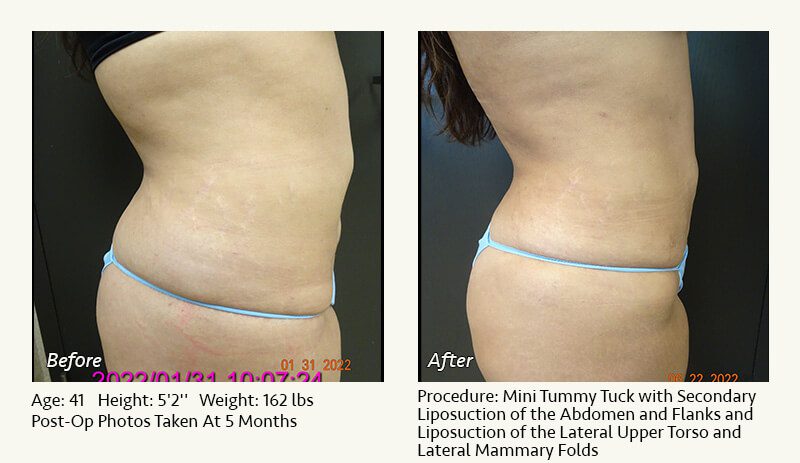
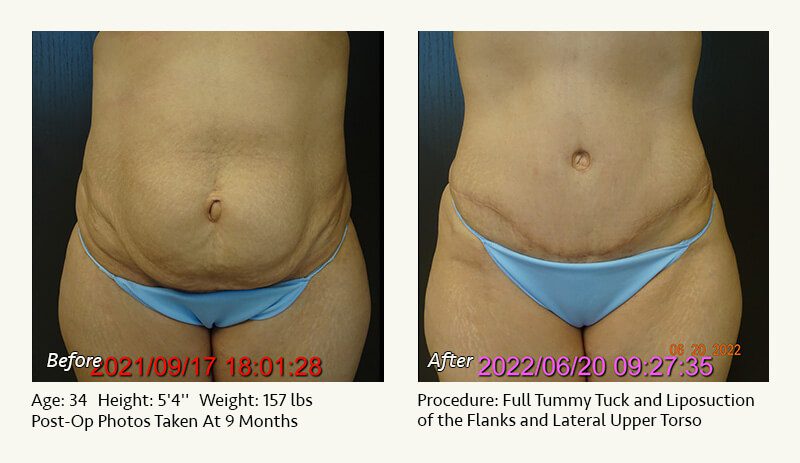
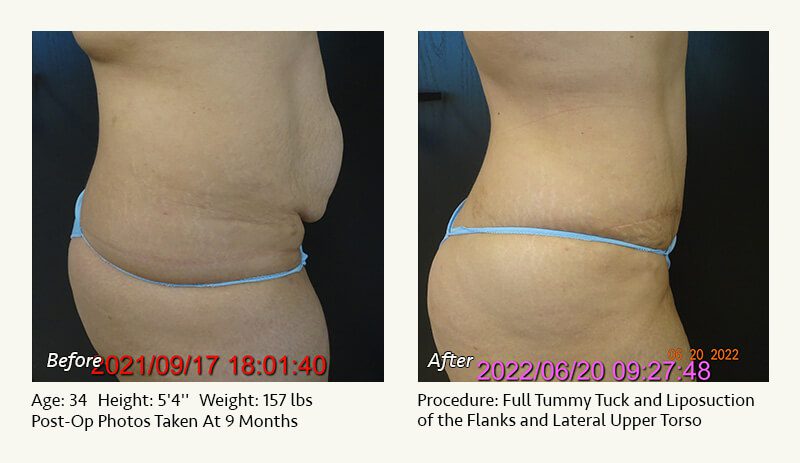
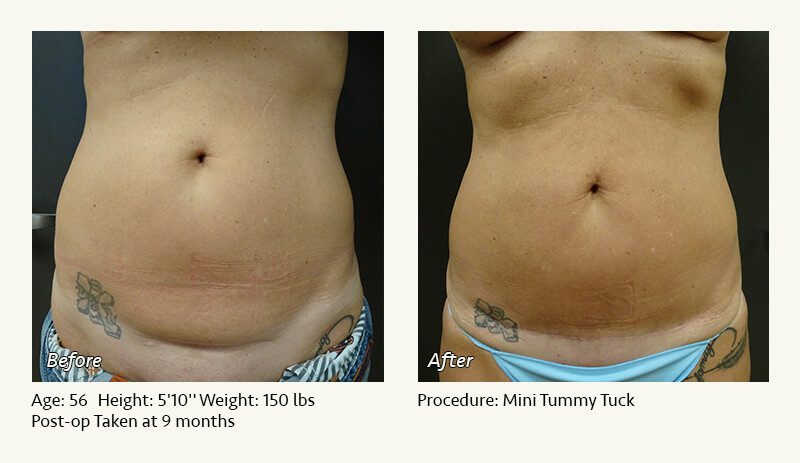
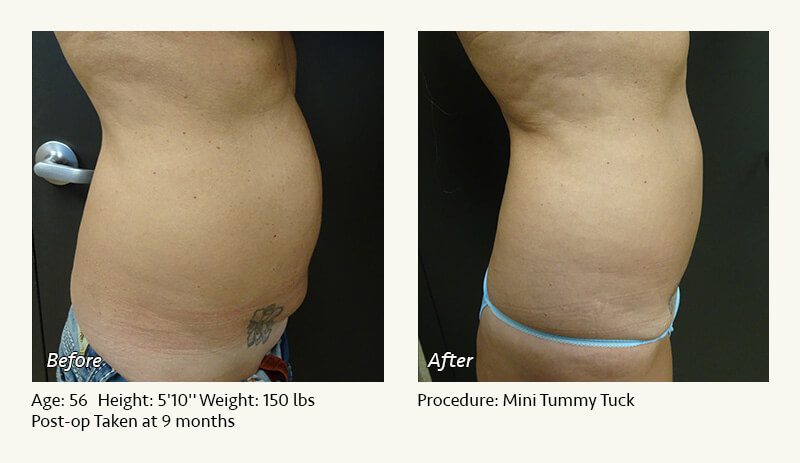
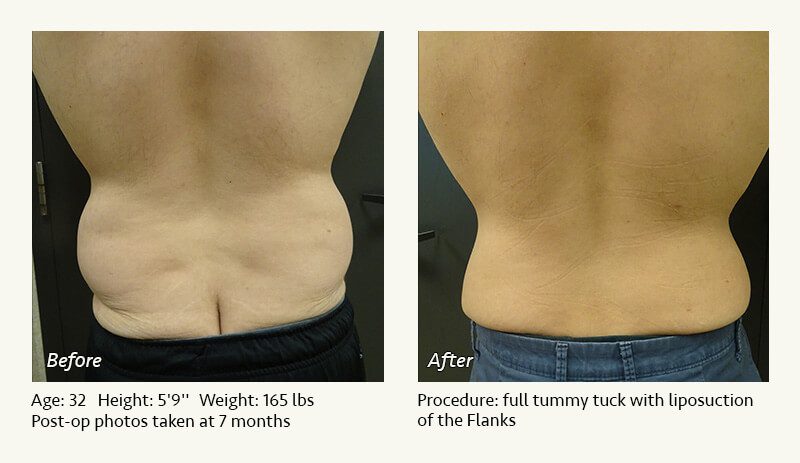
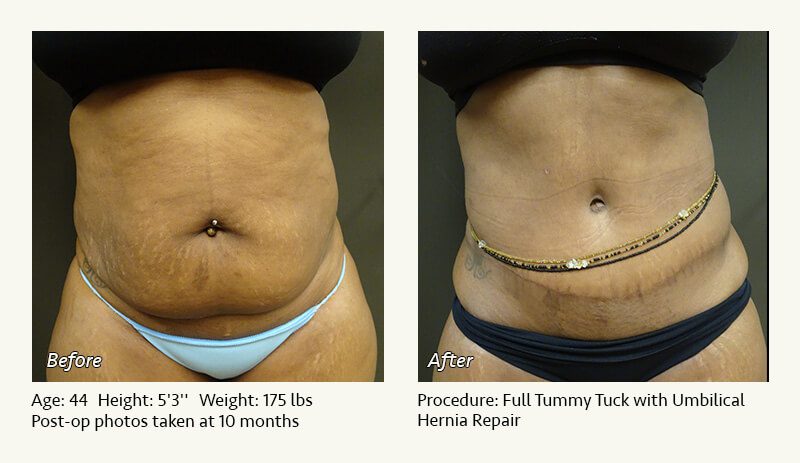
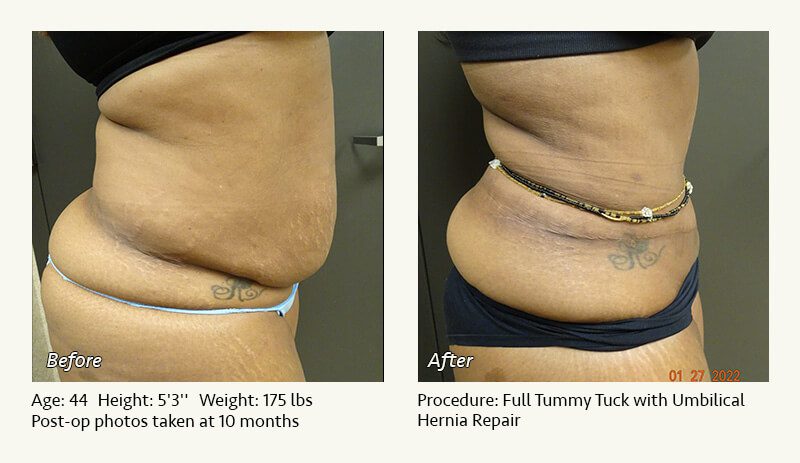
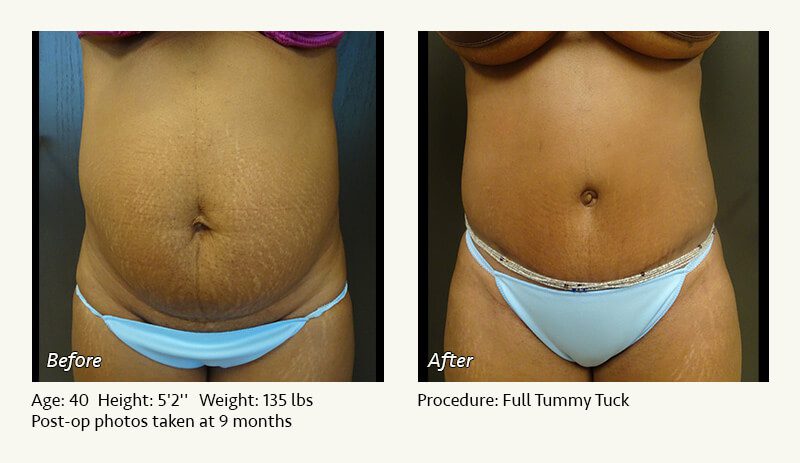
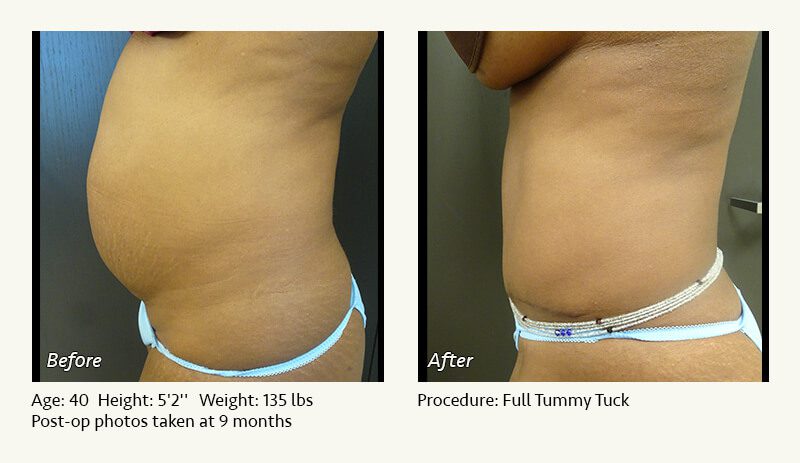
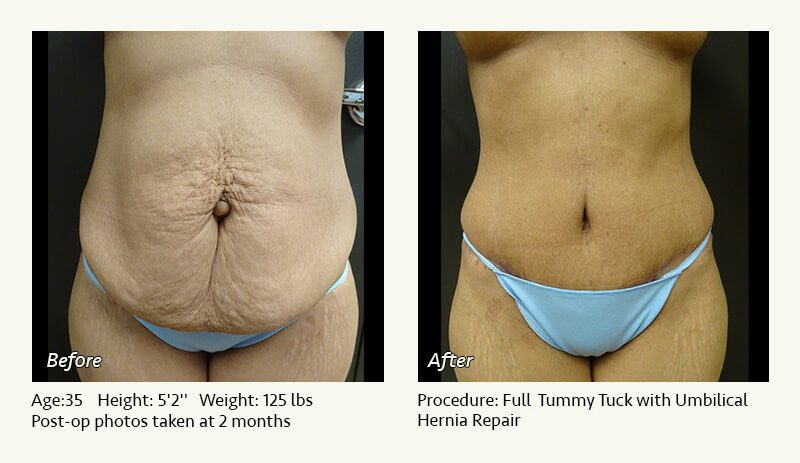
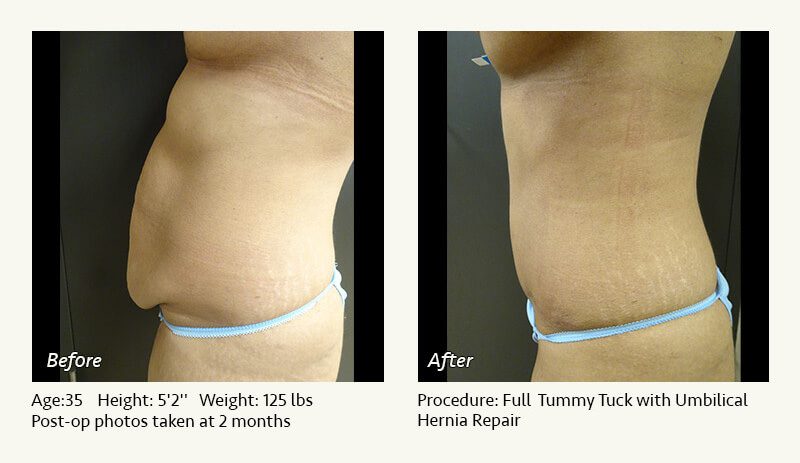
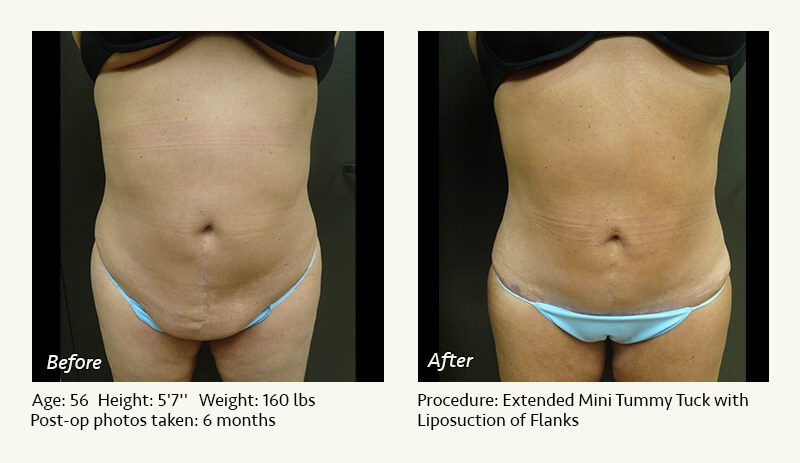
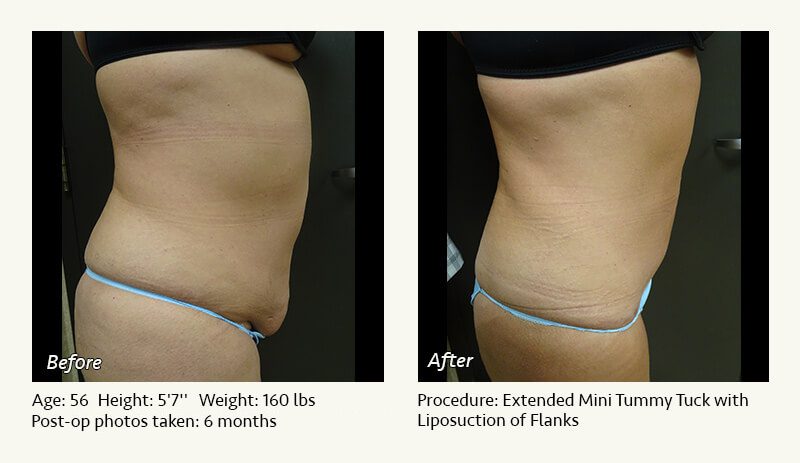
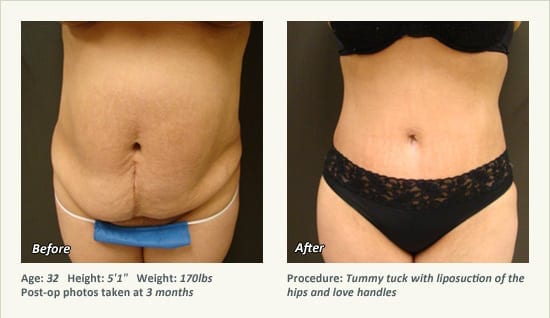
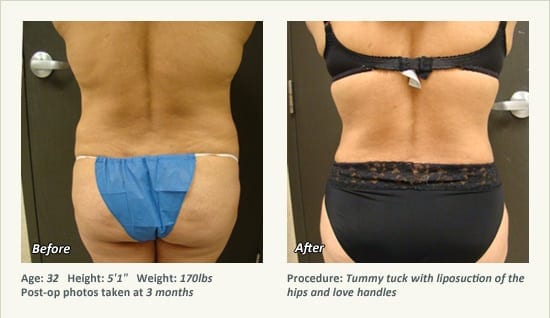
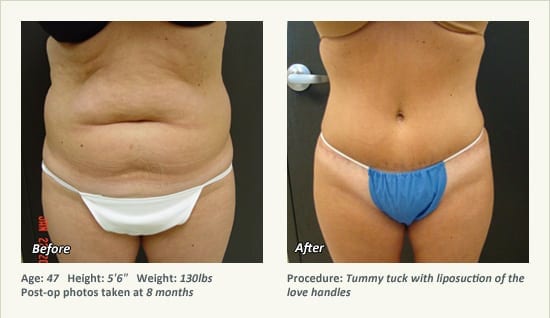
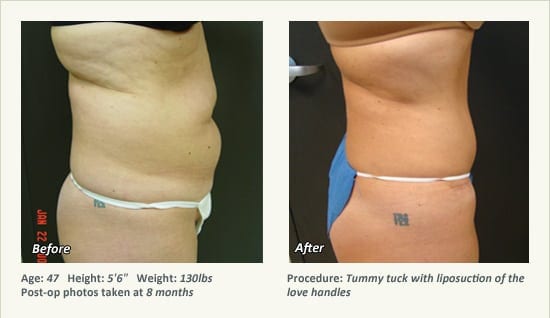
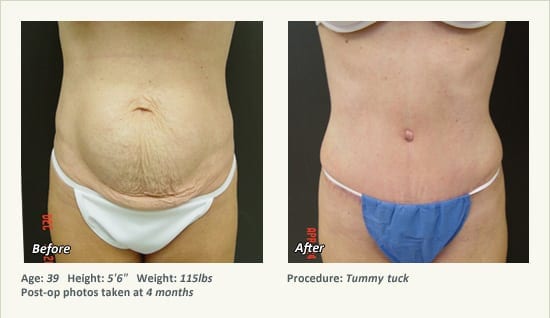
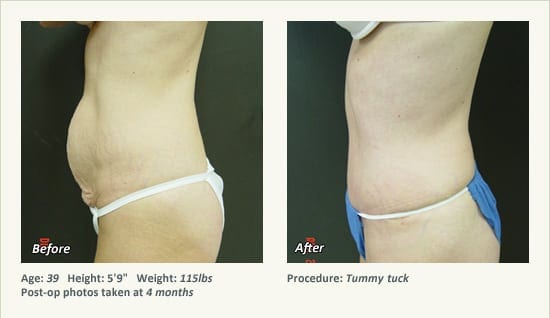
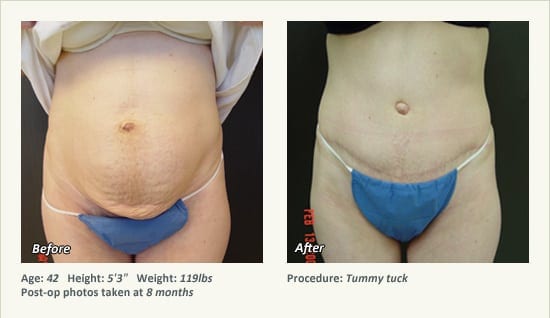
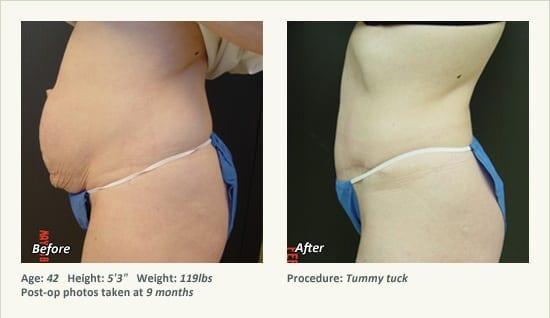
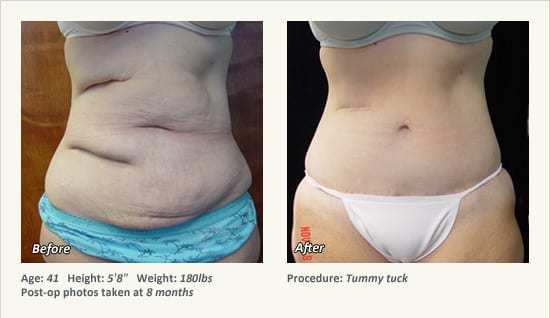
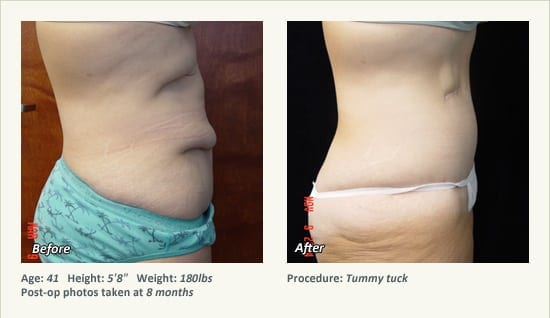
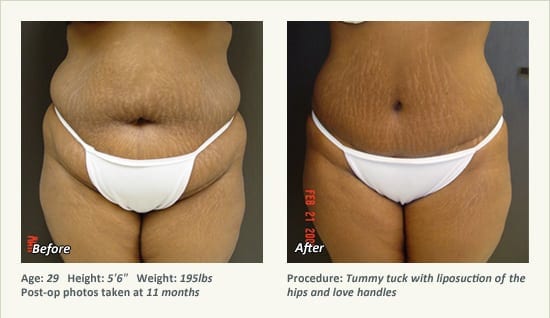
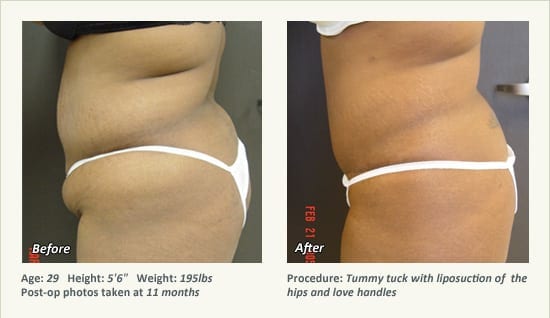
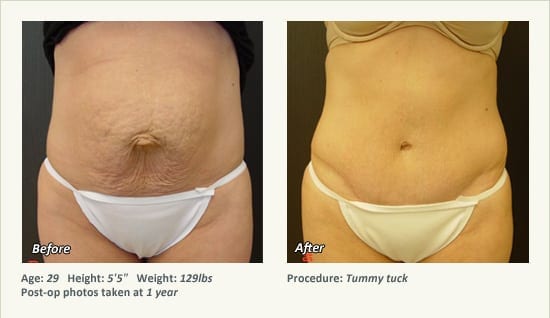
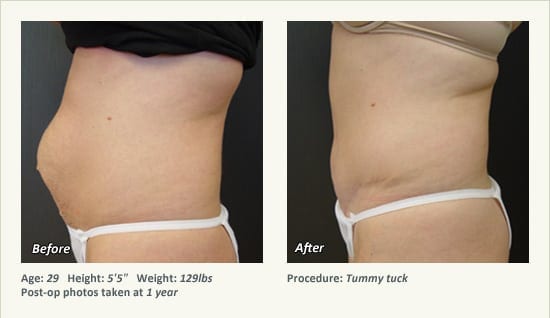
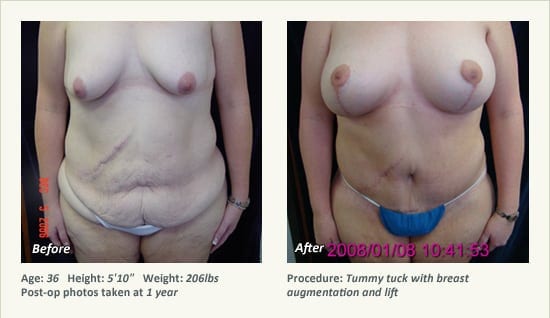
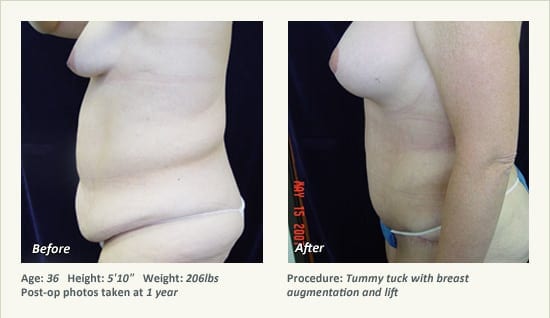
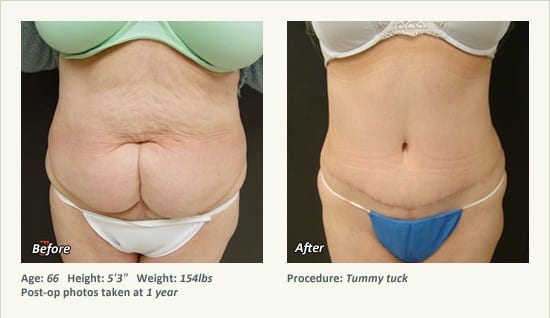
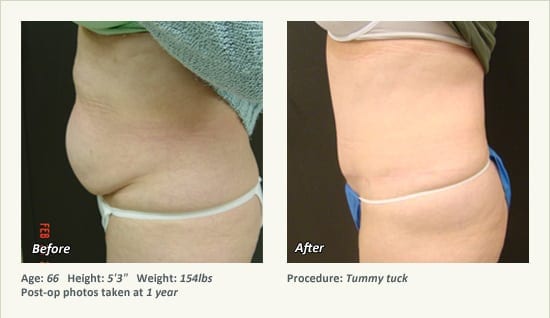
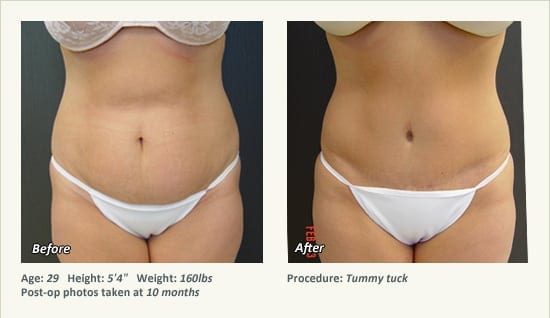
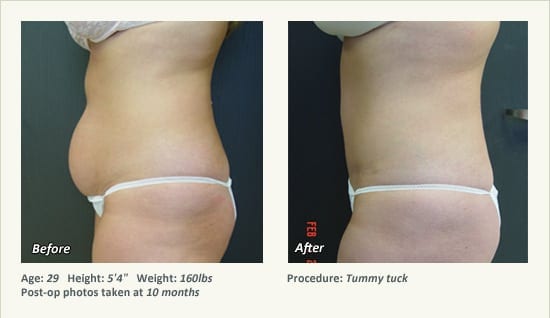
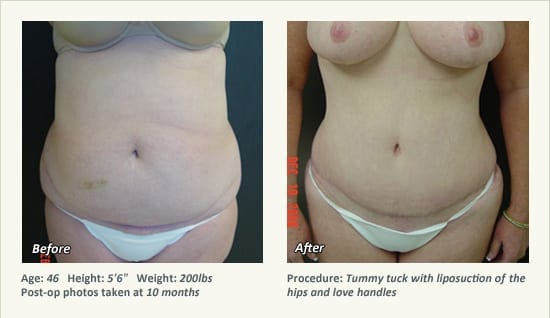
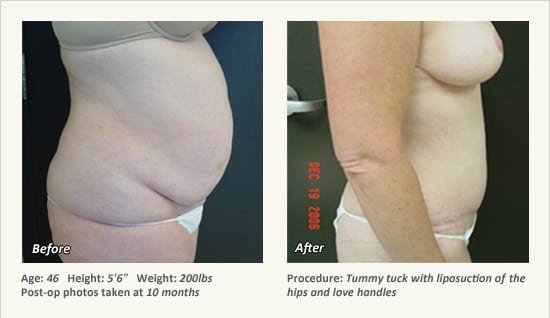
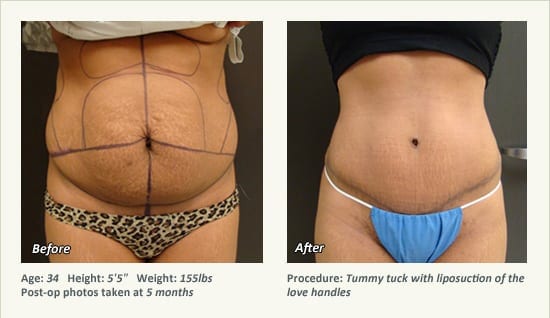
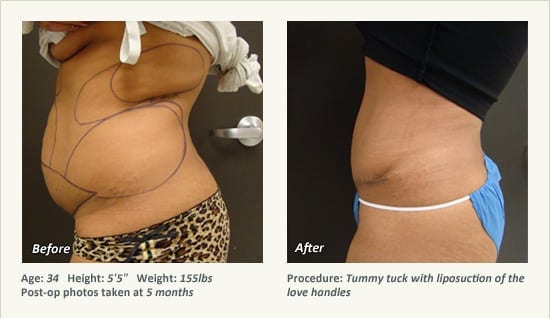
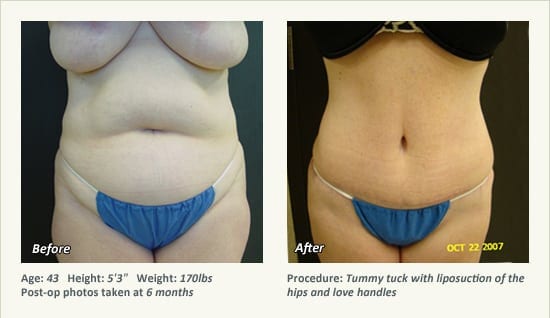
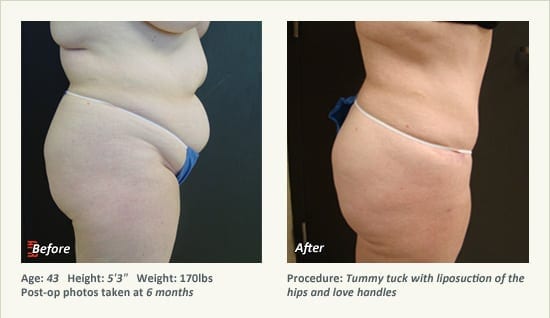
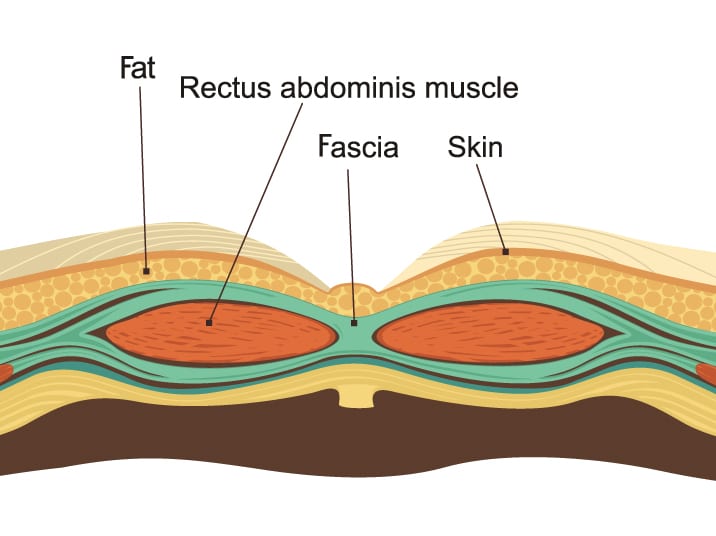
The abdominal wall consists of four distinct layers: skin, fat, fascia, and muscle. (The fascia is the fibrous tissue above and between the abdominal wall muscles.).
What types of abdominal contouring surgery does Dr. Friedman perform?
Dr. Friedman, one of the best Tummy tuck plastic surgeons in Plano, Texas performs four distinct abdominal contouring procedures, depending upon your specific anatomy and concerns:
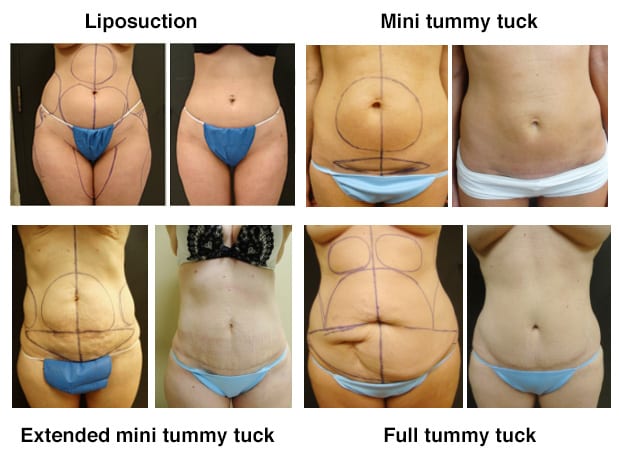
What will be improved by this procedure?
| Lipo | MiniTT | Extended miniTT | Full TT |
| Excessive fat |
| Yes | Yes | Yes | Yes |
| Loose skin |
| Below navel | No | Yes (mild) | Yes (moderate) | Yes (severe) |
| Above navel | No | No | No | Yes |
| Lax abdominal wall |
| Below navel | No | +/-(mild) | +/-(mild) | Yes (severe) |
| Above navel | No | No | No | Yes |
Liposuction
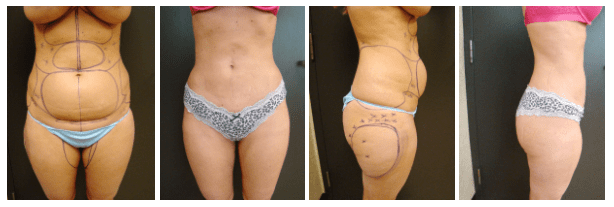
This is the most straightforward of the four abdominal contouring procedures. Liposuction reduces excessive abdominal wall fat in patients with good skin tone and good abdominal wall tone.
Remember: Liposuction will not tighten loose abdominal skin or fascia/muscle.
Procedure: While you are standing, Dr. Friedman will draw a topographic map of the areas of excessive abdominal fat. Once you are asleep under general anesthesia, Dr. Friedman will inject a dilute solution containing local anesthetic, adrenaline, and saline into the problem areas. This reduces bleeding and bruising, facilitates fat removal, and improves the safety of your procedure. Two to three small (¼ inch) incisions are used to suction excessive fat. A long tube-shaped instrument (cannula) is used to suction the excessive fat until improved contour is seen. The incisions are closed with internal, absorbable stitches. Butterly tapes are placed over the incisions.
Recovery: A tight compression garment must be worn at all times (except showers) for one month after surgery and on a tapering basis for a second month. You may require oral pain medicine for up to a week after surgery. You will be up and walking the day of surgery but must avoid exercise (beyond simple walking) for 4 weeks. Click here for more detailed postoperative instructions
Note: Most patients undergoing abdominal liposuction will also elect to undergo liposuction of the hips, love handles, and/or upper back. This narrows the waist and reduces the appearance of “side rolls.” Click here for before and after photos of liposuction of the abdomen, waistline, and other areas of the body.
Mini Tummy Tuck
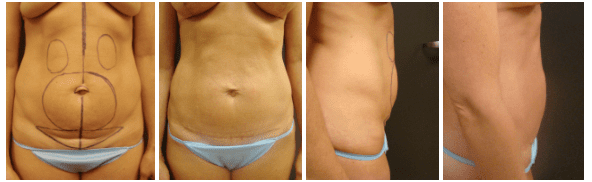
Although many women hope for a mini tummy tuck, this is actually the least commonly performed abdominal contouring procedure. Mini tummy tuck is useful for patients with excessive abdominal wall fat and mild central lower abdominal skin and/or fascial laxity. Many women choose mini tummy tuck to address a “dented-in” C-section scar with a small “overhang” of loose skin just above the scar.
Remember: Mini tummy tuck will not address excessive skin along the “sides” of the lower abdomen or above the belly button. It will not address upper abdominal bulging or major lower abdominal bulging due to loose fascia/muscle.
Procedure: The procedure begins with abdominal wall liposuction. Following liposuction, a small amount of central lower abdominal skin is removed through a bikini-type incision, and the remaining skin is tightened. If you already have a lower abdominal scar, it will be revised and incorporated into the mini tummy tuck. If you have mild lower abdominal wall bulging (without upper abdominal bulging), it may be tightened with permanent sutures. The lower abdominal incision is closed with absorbable, internal stitches and dressed with tissue glue. Occasionally one or two drains may be placed through the incision for about a week, though most mini tummy tuck patients do not require drains.
Recovery: A tight compression garment must be worn at all times (except showers) for one month after surgery and on a tapering basis for a second month. You may require oral pain medicine for up to a week after surgery. You will be up and walking the day of surgery but must avoid exercise (beyond simple walking) for 4 weeks. You must avoid exercises that put tension on your lower abdominal incision (i.e. backbends and side bends) for at least 3 months. If you underwent tightening of the lower abdominal wall, you must avoid sit ups for 6 months.
Extended Mini Tummy Tuck
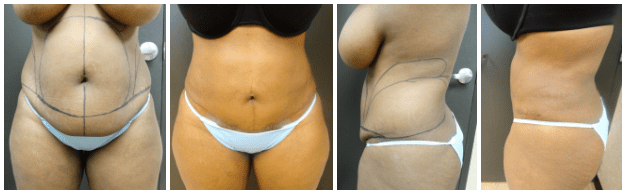
This is truly a hybrid procedure somewhere between liposuction and full tummy tuck. An extended mini tummy tuck is basically a lower tummy tuck. It is useful for patients with excessive abdominal wall fat and mild to moderate lower abdominal skin and/or fascial laxity. A long lower abdominal incision is required for removal of the lower abdominal excessive skin. However, in comparison to a full tummy tuck, the incision is generally lower and more easily concealed, and the recovery is easier.
Remember: Extended mini tummy tuck will not address upper abdominal skin or fascial laxity and will not reshape your navel. (These are best accomplished with a full tummy tuck.)
Procedure: The procedure begins with abdominal wall liposuction. Following liposuction, a large amount of lower abdominal skin is removed, and the remaining skin is tightened. If you already have a lower abdominal scar, it will be revised and incorporated into the mini tummy tuck. If you have mild lower abdominal wall bulging (without upper abdominal bulging), it may be tightened with permanent sutures. The lower abdominal incision is closed with absorbable, internal stitches and dressed with tissue glue. Two drains may be placed through the incision for up to two weeks.
Recovery: A tight compression garment must be worn at all times (except showers) for one month after surgery and on a tapering basis for a second month. You may require oral pain medicine for up to a week after surgery. You will be up and walking the day of surgery but must avoid exercise (beyond simple walking) for 4 weeks. You must avoid exercises that put tension on your lower abdominal incision (i.e. backbends and side bends) for at least 3 months. If you underwent tightening of the lower abdominal wall, you must avoid sit ups for 6 months.
Full Tummy Tuck
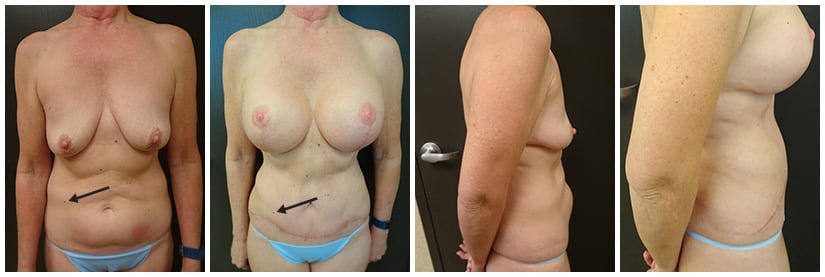
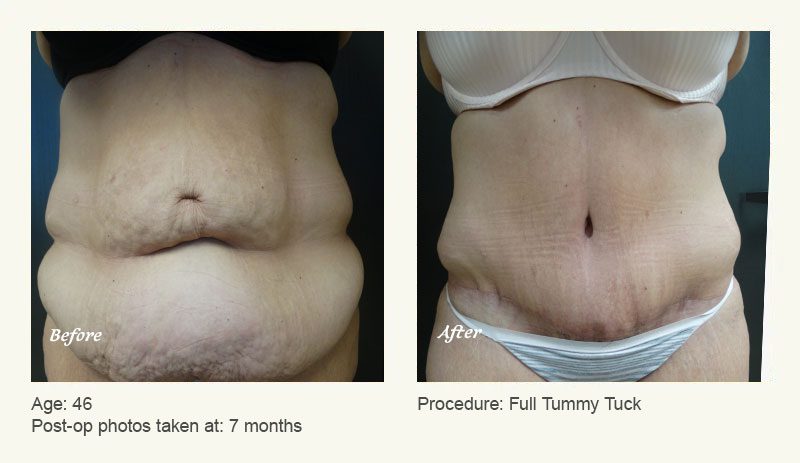
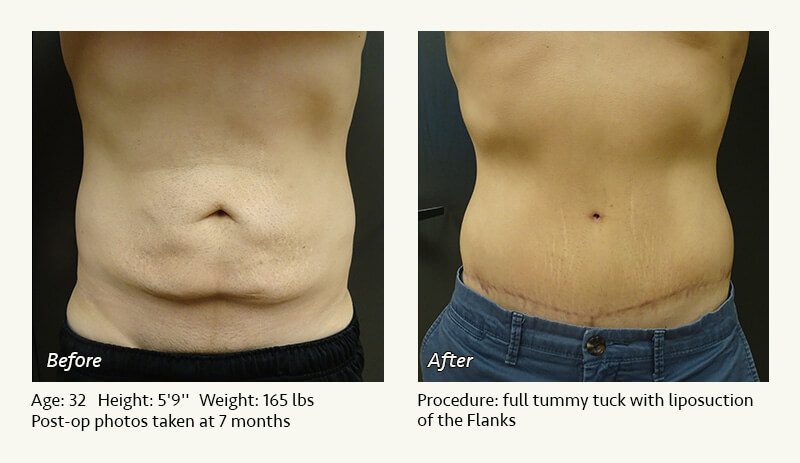
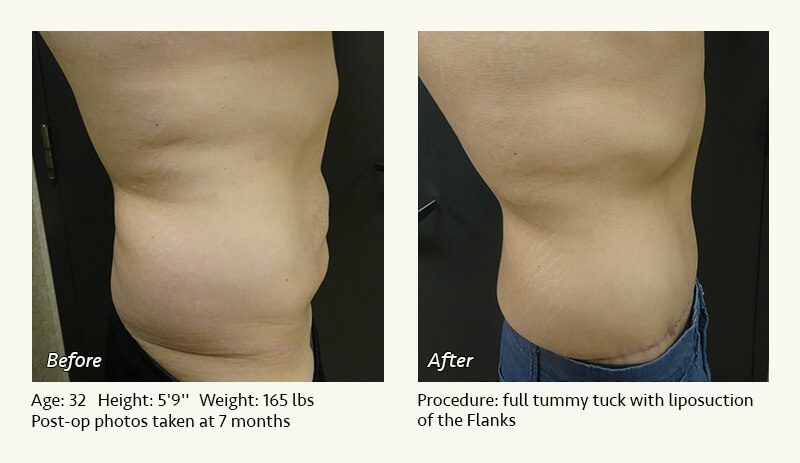
This is the most commonly performed tummy tuck procedure because it most thoroughly addresses laxity of the skin and abdominal wall. It is the only abdominal contouring procedure that improves upper abdominal skin laxity, abdominal bulging due to laxity of the entire abdominal wall, and the “hidden” or misshapen belly button.
In patients with loose skin, “stretched-out” fascia and excessive fat, full tummy tuck is usually the best option.
Procedure:
- Excessive fat above the navel is contoured by liposuction.
- A lengthy lower abdominal skin incision is made, and the abdominal skin and fat are elevated from the abdominal wall.
- Permanent internal stitches are used to tighten the loose fascia (by up to 6 inches) side-to-side from the rib cage down to the pubic bone, narrowing the waistline.
- All skin and fat from the navel to the pubic area is removed.
- The mobilized upper abdominal skin and remaining fat are pulled down, and the lower abdominal incision is closed with absorbable, internal stitches. No external stitches are used.
- The navel (the same one you’ve always had in the same place you’ve always had it) exits through the repositioned skin. The belly button shape is oriented vertically, rather than horizontally, after surgery.
- Two drainage tubes are placed through the incision and are removed after about two weeks.
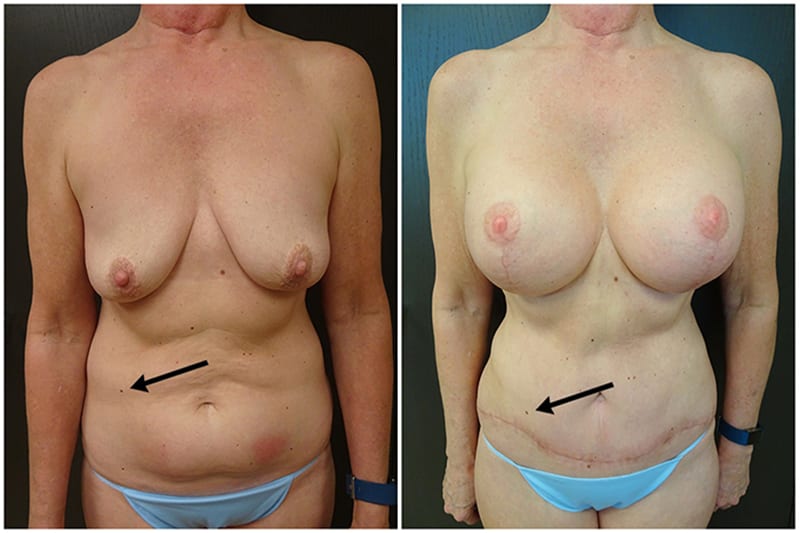
NOTE: You can see the movement of the upper abdominal skin by viewing the position of the mole (see arrow on photo) as it shifts from the upper abdomen (before surgery) to the lower abdomen (after surgery).
Recovery:
- You will require oral pain medication for about 10 to 14 days after surgery. To reduce your initial postoperative pain, Dr. Friedman will place two pain pumps (which look like epidural catheters exiting the front, instead of the back). These infuse local anesthetic on to your abdominal wall for about 3 days after surgery. The surgery still hurts, but the pain pumps help quite a bit.
- Like all other abdominal contouring procedures, a full tummy tuck requires that you wear a tight compression garment at all times (except showers) for one month after surgery and on a tapering basis for a second month.
- Because of the large amount of skin removal, you will initially walk in a bent-over “little old lady” position. It may take a week or more for you to stand upright or lie flat. You will need a recliner at home for the first two weeks, and we will provide you with a walker (no, we’re not kidding) for the first week. You will need a responsible adult at home with you for at least a week (and preferably closer to two weeks) to help you into and out of the recliner.
- Dr. Friedman will send you home with sequential compression devices (SCDs), which intermittently squeeze your legs to reduce the risk of blood clots. For the same reason, he may also place you on a blood thinner for about a week.
- You will have to walk regularly. You will not engage in any exercise beyond walking for at least 6 weeks. No sit ups for 6 months.
More detailed instructions are listed at the bottom of this page.
The primary advantages of a full tummy tuck are:
- Permanent removal of excessive lower abdominal skin and stretch marks.
- Permanent tightening of the abdominal wall (assuming you do not have more children or experience a major weight change after surgery).
- Improved contour of the navel in most patients.
- Improved waistline.
The primary disadvantages of a full tummy tuck are:
- An extended horizontal lower abdominal scar. The scar will fade significantly with time, but like all scars, it is permanent. There is also a scar around the navel, though this is well-hidden in most patients.
- A significant recovery. You probably won’t like Dr. Friedman very much for about a week or two after surgery. After that, you’ll probably like him a lot.
Liposuction
Liposuction
This is the most straightforward of the four abdominal contouring procedures. Liposuction reduces excessive abdominal wall fat in patients with good skin tone and good abdominal wall tone.
Remember: Liposuction will not tighten loose abdominal skin or fascia/muscle.
Procedure: While you are standing, Dr. Friedman will draw a topographic map of the areas of excessive abdominal fat. Once you are asleep under general anesthesia, Dr. Friedman will inject a dilute solution containing local anesthetic, adrenaline, and saline into the problem areas. This reduces bleeding and bruising, facilitates fat removal, and improves the safety of your procedure. Two to three small (¼ inch) incisions are used to suction excessive fat. A long tube-shaped instrument (cannula) is used to suction the excessive fat until improved contour is seen. The incisions are closed with internal, absorbable stitches. Butterly tapes are placed over the incisions.
Recovery: A tight compression garment must be worn at all times (except showers) for one month after surgery and on a tapering basis for a second month. You may require oral pain medicine for up to a week after surgery. You will be up and walking the day of surgery but must avoid exercise (beyond simple walking) for 4 weeks. Click here for more detailed postoperative instructions
Note: Most patients undergoing abdominal liposuction will also elect to undergo liposuction of the hips, love handles, and/or upper back. This narrows the waist and reduces the appearance of “side rolls.” Click here for before and after photos of liposuction of the abdomen, waistline, and other areas of the body.
Close
Mini Tummy Tuck
Mini Tummy Tuck
Although many women hope for a mini tummy tuck, this is actually the least commonly performed abdominal contouring procedure. Mini tummy tuck is useful for patients with excessive abdominal wall fat and mild central lower abdominal skin and/or fascial laxity. Many women choose mini tummy tuck to address a “dented-in” C-section scar with a small “overhang” of loose skin just above the scar.
Remember: Mini tummy tuck will not address excessive skin along the “sides” of the lower abdomen or above the belly button. It will not address upper abdominal bulging or major lower abdominal bulging due to loose fascia/muscle.
Procedure: The procedure begins with abdominal wall liposuction. Following liposuction, a small amount of central lower abdominal skin is removed through a bikini-type incision, and the remaining skin is tightened. If you already have a lower abdominal scar, it will be revised and incorporated into the mini tummy tuck. If you have mild lower abdominal wall bulging (without upper abdominal bulging), it may be tightened with permanent sutures. The lower abdominal incision is closed with absorbable, internal stitches and dressed with tissue glue. Occasionally one or two drains may be placed through the incision for about a week, though most mini tummy tuck patients do not require drains.
Recovery: A tight compression garment must be worn at all times (except showers) for one month after surgery and on a tapering basis for a second month. You may require oral pain medicine for up to a week after surgery. You will be up and walking the day of surgery but must avoid exercise (beyond simple walking) for 4 weeks. You must avoid exercises that put tension on your lower abdominal incision (i.e. backbends and side bends) for at least 3 months. If you underwent tightening of the lower abdominal wall, you must avoid sit ups for 6 months.
Close
Extended Mini Tummy Tuck
Extended Mini Tummy Tuck
This is truly a hybrid procedure somewhere between liposuction and full tummy tuck. An extended mini tummy tuck is basically a lower tummy tuck. It is useful for patients with excessive abdominal wall fat and mild to moderate lower abdominal skin and/or fascial laxity. A long lower abdominal incision is required for removal of the lower abdominal excessive skin. However, in comparison to a full tummy tuck, the incision is generally lower and more easily concealed, and the recovery is easier.
Remember: Extended mini tummy tuck will not address upper abdominal skin or fascial laxity and will not reshape your navel. (These are best accomplished with a full tummy tuck.)
Procedure: The procedure begins with abdominal wall liposuction. Following liposuction, a large amount of lower abdominal skin is removed, and the remaining skin is tightened. If you already have a lower abdominal scar, it will be revised and incorporated into the mini tummy tuck. If you have mild lower abdominal wall bulging (without upper abdominal bulging), it may be tightened with permanent sutures. The lower abdominal incision is closed with absorbable, internal stitches and dressed with tissue glue. Two drains may be placed through the incision for up to two weeks.
Recovery: A tight compression garment must be worn at all times (except showers) for one month after surgery and on a tapering basis for a second month. You may require oral pain medicine for up to a week after surgery. You will be up and walking the day of surgery but must avoid exercise (beyond simple walking) for 4 weeks. You must avoid exercises that put tension on your lower abdominal incision (i.e. backbends and side bends) for at least 3 months. If you underwent tightening of the lower abdominal wall, you must avoid sit ups for 6 months.
Close
Full Tummy Tuck
Full Tummy Tuck
This is the most commonly performed tummy tuck procedure because it most thoroughly addresses laxity of the skin and abdominal wall. It is the only abdominal contouring procedure that improves upper abdominal skin laxity, abdominal bulging due to laxity of the entire abdominal wall, and the “hidden” or misshapen belly button.
In patients with loose skin, “stretched-out” fascia and excessive fat, full tummy tuck is usually the best option.
Procedure:
- Excessive fat above the navel is contoured by liposuction.
- A lengthy lower abdominal skin incision is made, and the abdominal skin and fat are elevated from the abdominal wall.
- Permanent internal stitches are used to tighten the loose fascia (by up to 6 inches) side-to-side from the rib cage down to the pubic bone, narrowing the waistline.
- All skin and fat from the navel to the pubic area is removed.
- The mobilized upper abdominal skin and remaining fat are pulled down, and the lower abdominal incision is closed with absorbable, internal stitches. No external stitches are used.
- The navel (the same one you’ve always had in the same place you’ve always had it) exits through the repositioned skin. The belly button shape is oriented vertically, rather than horizontally, after surgery.
- Two drainage tubes are placed through the incision and are removed after about two weeks.
NOTE: You can see the movement of the upper abdominal skin by viewing the position of the mole (see arrow on photo) as it shifts from the upper abdomen (before surgery) to the lower abdomen (after surgery).
Recovery:
- You will require oral pain medication for about 10 to 14 days after surgery. To reduce your initial postoperative pain, Dr. Friedman will place two pain pumps (which look like epidural catheters exiting the front, instead of the back). These infuse local anesthetic on to your abdominal wall for about 3 days after surgery. The surgery still hurts, but the pain pumps help quite a bit.
- Like all other abdominal contouring procedures, a full tummy tuck requires that you wear a tight compression garment at all times (except showers) for one month after surgery and on a tapering basis for a second month.
- Because of the large amount of skin removal, you will initially walk in a bent-over “little old lady” position. It may take a week or more for you to stand upright or lie flat. You will need a recliner at home for the first two weeks, and we will provide you with a walker (no, we’re not kidding) for the first week. You will need a responsible adult at home with you for at least a week (and preferably closer to two weeks) to help you into and out of the recliner.
- Dr. Friedman will send you home with sequential compression devices (SCDs), which intermittently squeeze your legs to reduce the risk of blood clots. For the same reason, he may also place you on a blood thinner for about a week.
- You will have to walk regularly. You will not engage in any exercise beyond walking for at least 6 weeks. No sit ups for 6 months.
More detailed instructions are listed at the bottom of this page.
The primary advantages of a full tummy tuck are:
- Permanent removal of excessive lower abdominal skin and stretch marks.
- Permanent tightening of the abdominal wall (assuming you do not have more children or experience a major weight change after surgery).
- Improved contour of the navel in most patients.
- Improved waistline.
The primary disadvantages of a full tummy tuck are:
- An extended horizontal lower abdominal scar. The scar will fade significantly with time, but like all scars, it is permanent. There is also a scar around the navel, though this is well-hidden in most patients.
- A significant recovery. You probably won’t like Dr. Friedman very much for about a week or two after surgery. After that, you’ll probably like him a lot.
Close
Dr. Friedman performs all abdominal contouring procedures under general anesthesia. The procedures are performed in his AAAASF-accredited surgical facility, The West Plano Plastic Surgery Center, which is conveniently located on the campus of Texas Health Presbyterian Hospital of Plano. He strictly uses physicians—not nurses or technicians—to administer your anesthesia. Most patients will go home the same day; if you are having a more extensive procedure, such as full tummy tuck with extensive liposuction or breast surgery, Dr. Friedman may monitor you overnight in his facility and send you home the following morning.
Dr. Friedman continuously strives to find ways to improve his surgical results. His approach to tummy tucks has evolved over his decades in practice and now differs substantially from those of many of his colleagues.
What makes Dr. Friedman’s full tummy tuck technique different?
Fat
Many surgeons decline to perform liposuction of the abdominal wall in conjunction with full tummy tuck due to fears regarding the blood supply to the tissues. This leaves excessive abdominal wall fat untreated.
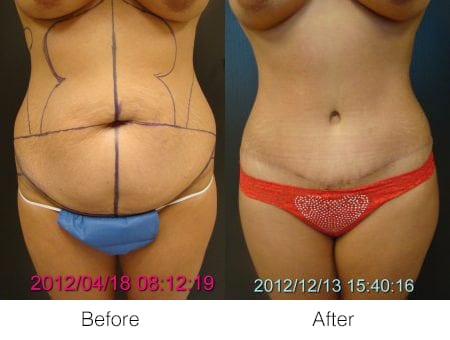
Dr. Friedman routinely incorporates conservative liposuction of the abdominal wall with tummy tucks. (See markings of upper abdomen above.) This improves tummy tuck results while minimizing the risk of blood flow problems.
Fascia/muscle
Many surgeons perform only modest tightening of the abdominal wall.
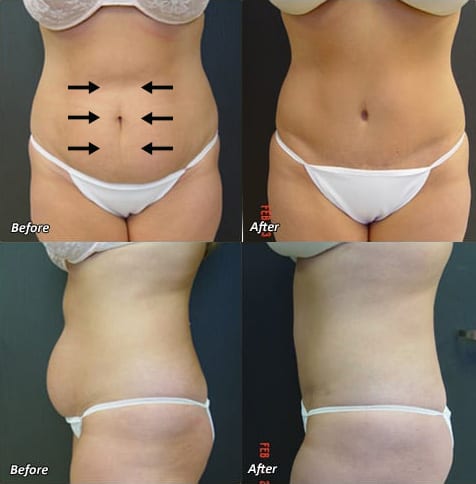
In contrast, Dr. Friedman performs very significant tightening of the abdominal fascia/muscle (as seen in his patient above), tucking the fascia an average of 5 inches across the abdominal wall. This maximizes flattening of the abdominal wall.
Many surgeons perform tightening of the abdominal wall with a single, continuous suture.
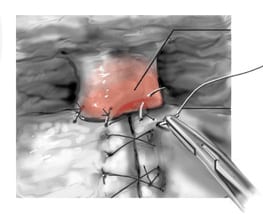
In contrast, Dr. Friedman uses individual sutures spaced every centimeter (less than ⅓”) to better control the shaping of the abdominal wall and to provide a more durable closure.
Skin
Many surgeons perform a direct “up-and-down” closure of the abdominal tissues. This often results in excessive tension centrally with insufficient tightening on the sides (with poor definition of the waist and possible “dog ears” of puckered skin above the hips).
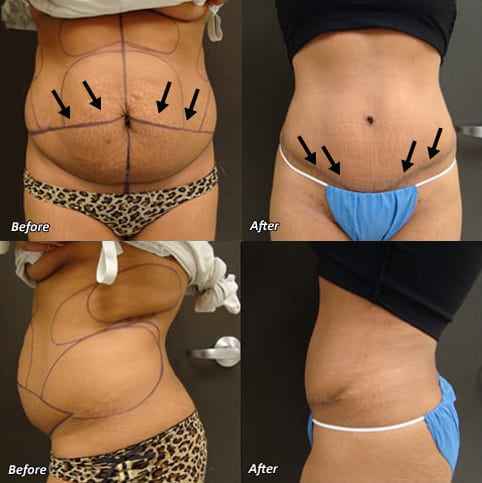
Dr. Friedman pulls the skin and subcutaneous tissues “down and in,” placing greater tension along the sides of the closure and less tension along the center. This maximizes the contour of the waist (especially if liposuction of the waist is done at the same time, as it was in Dr. Friedman’s patient above), minimizes the risk of “dog ears,” and reduces the risk of wound healing issues or widened scars in the central lower abdomen.
Navel (umbilicus)
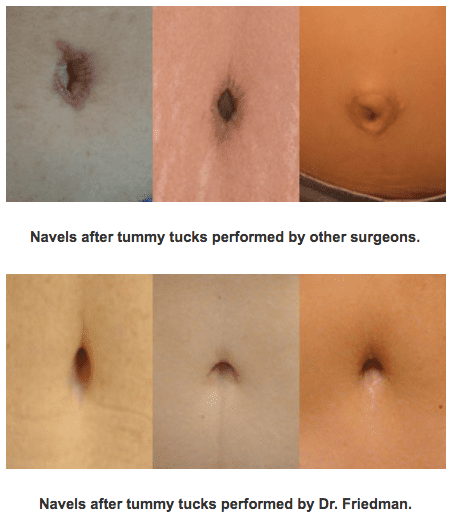
Plastic surgeons vary widely in their techniques for reshaping the navel. This variation in technique creates a similar variation in results. As you compare plastic surgeons for your tummy tuck, spend time looking at their patients’ belly buttons. An obvious scar around the navel is a tell-tale sign of a tummy tuck.
Fat
Fat
Many surgeons decline to perform liposuction of the abdominal wall in conjunction with full tummy tuck due to fears regarding the blood supply to the tissues. This leaves excessive abdominal wall fat untreated.
Dr. Friedman routinely incorporates conservative liposuction of the abdominal wall with tummy tucks. (See markings of upper abdomen above.) This improves tummy tuck results while minimizing the risk of blood flow problems.
Close
Fascia/muscle
Fascia/muscle
Many surgeons perform only modest tightening of the abdominal wall.
In contrast, Dr. Friedman performs very significant tightening of the abdominal fascia/muscle (as seen in his patient above), tucking the fascia an average of 5 inches across the abdominal wall. This maximizes flattening of the abdominal wall.
Many surgeons perform tightening of the abdominal wall with a single, continuous suture.
In contrast, Dr. Friedman uses individual sutures spaced every centimeter (less than ⅓”) to better control the shaping of the abdominal wall and to provide a more durable closure.
Close
Skin
Skin
Many surgeons perform a direct “up-and-down” closure of the abdominal tissues. This often results in excessive tension centrally with insufficient tightening on the sides (with poor definition of the waist and possible “dog ears” of puckered skin above the hips).
Dr. Friedman pulls the skin and subcutaneous tissues “down and in,” placing greater tension along the sides of the closure and less tension along the center. This maximizes the contour of the waist (especially if liposuction of the waist is done at the same time, as it was in Dr. Friedman’s patient above), minimizes the risk of “dog ears,” and reduces the risk of wound healing issues or widened scars in the central lower abdomen.
Close
Navel (umbilicus)
Navel (umbilicus)
Plastic surgeons vary widely in their techniques for reshaping the navel. This variation in technique creates a similar variation in results. As you compare plastic surgeons for your tummy tuck, spend time looking at their patients’ belly buttons. An obvious scar around the navel is a tell-tale sign of a tummy tuck.
Close
We have discussed a variety of procedures including abdominal liposuction, mini tummy tuck, extended mini tummy tuck, and full tummy tuck. Within the category of full tummy tucks, we have discussed the most common type in detail. However, in certain circumstances, specific modifications can and sometimes should be made to full tummy techniques. Just as there are no “standard” patients, there is no single “standard” full tummy tuck technique that is right for every patient.
What different types of full tummy tuck does Dr. Friedman perform?
The amount of lower abdominal skin excess and the height of the navel are the two most important factors determining the most appropriate type of full tummy tuck. As you view the different technical variations below, you may wish to use this chart for reference.
| Standard TT | Umbilical float | Limited vertical scar | Extended vertical scar | |
| Amount of skin excess | Moderate to large | Small | Small to average | Severe |
| Navel position | Low to average | High | Average to high | Does not matter |
Standard full tummy tuck
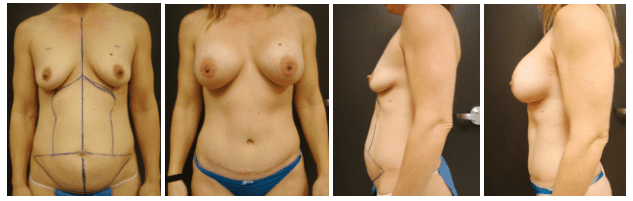
Most patients are best served by a “standard” full tummy tuck, which is described in detail above. It entails removal of all skin from the navel to the pubic area, leaving a long horizontal lower abdominal scar and a generally inconspicuous scar around the belly button.
Standard tummy tuck is appropriate in patients with a moderate to large amount of excessive lower abdominal skin and a low to average height navel (which encompasses the vast majority of patients seeking fully tummy tuck).
Umbilical float
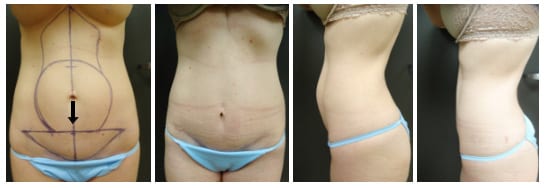
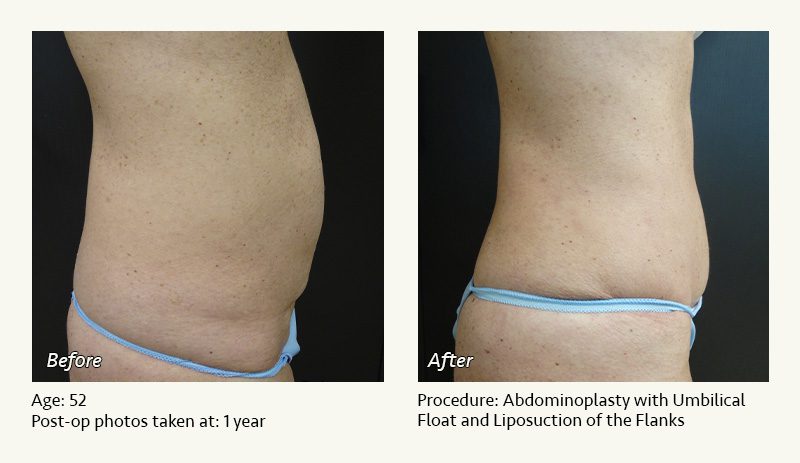
In patients with a small excess of lower abdominal skin and a high navel, an umbilical float involves removal of a limited amount of lower abdominal skin (similar in pattern to an extended mini tummy tuck) with detachment of the belly button “stalk” from the abdominal wall. Following tightening of the abdominal wall, the navel “floats” down with the abdominal skin (see arrow on photo above). There is a single long horizontal lower abdominal scar. There is no scar around the navel.
This procedure is appropriate for a very limited subset of patients. It should only be performed in patients with an high navel, since the belly button will be pulled downward to a lower position during the procedure. Similarly, it should only be performed in patients with a modest amount of skin excess, since aggressive removal of skin will result in an abnormally low navel
Limited vertical scar
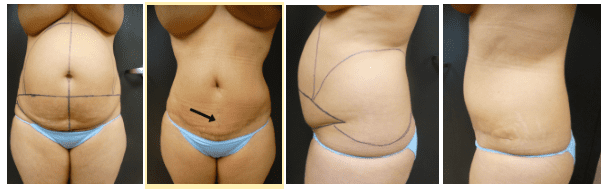
In patients with a small excess of lower abdominal skin and an average navel height OR a moderate excess of lower abdominal skin and a high navel, modified tummy tuck entails removal of excessive lower abdominal skin. Due to the limited amount of excess lower abdominal skin (relative to belly button position), the skin excision does not extend up as far as the belly button. Limited vertical scar: Therefore, a limited vertical scar–corresponding to the previous navel position–is left along the lower abdomen (see arrow on photo above).
So this procedure involves three scars (the same two scars left by a standard full tummy tuck plus the limited vertical lower abdominal scar). On the bright side, the long horizontal lower abdominal scar is frequently positioned lower (closer to the pubic region) with this technique than with a standard tummy tuck.
Extended vertical scar
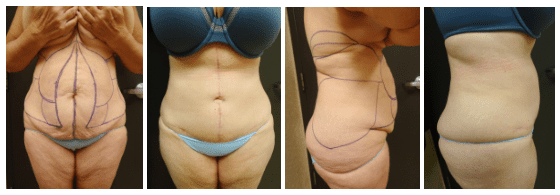
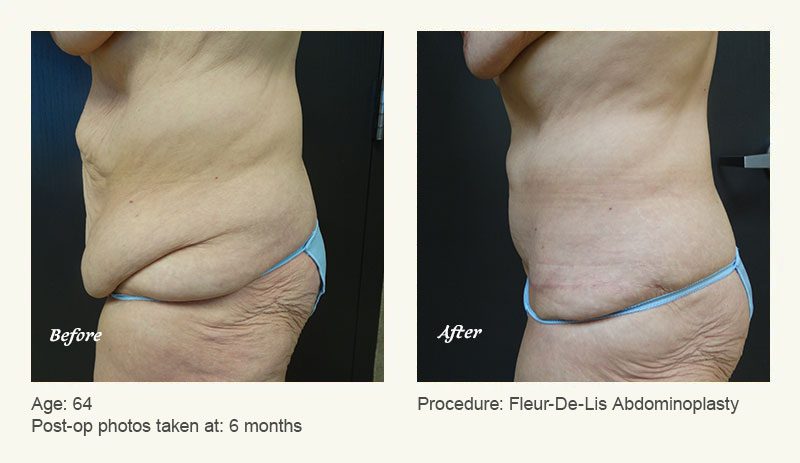
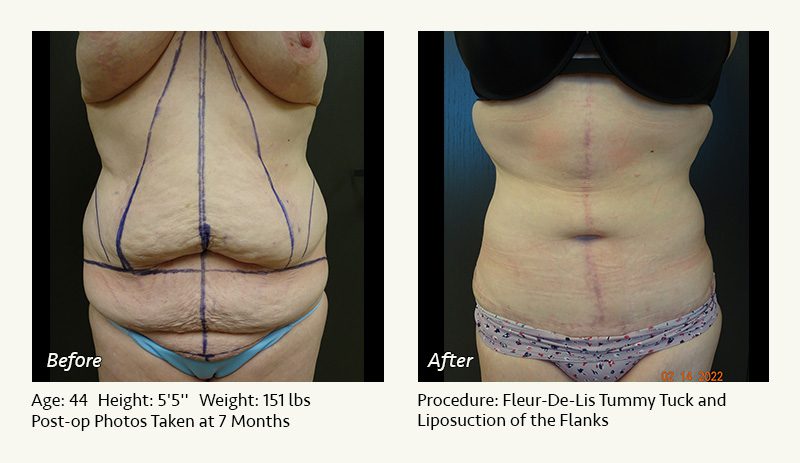
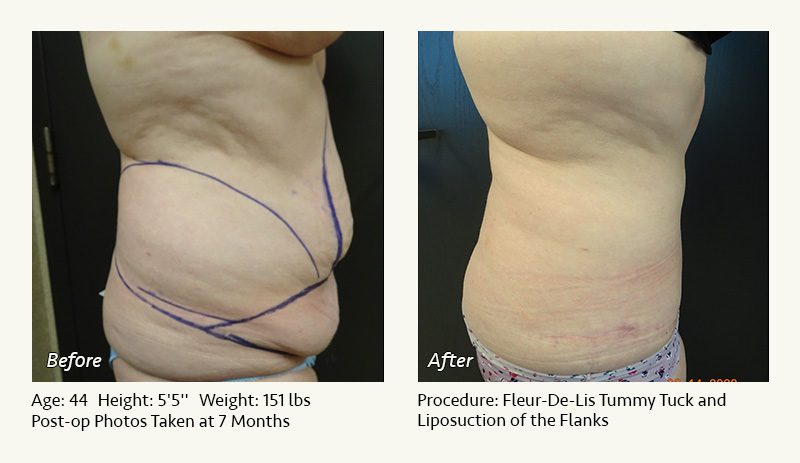
In patients who have experienced major weight loss and who have severe skin excess in both vertical and horizontal dimensions, an extended vertical scar (used to remove horizontal skin excess) may be combined with a standard lower horizontal scar (used to remove vertical skin excess). This combination results in an upside-down T-shaped scar and is better known as a fleur-de-lis tummy tuck.
This procedure involves the significant trade-off of a lengthy vertical midline abdominal scar. Its use is limited to patients who have lost a very large amount of weight. It works particularly well in patients who already have an upper midline abdominal scar from prior surgery. It also effectively tightens loose skin along the “love handles.”
Standard full tummy tuck
Standard full tummy tuck
Most patients are best served by a “standard” full tummy tuck, which is described in detail above. It entails removal of all skin from the navel to the pubic area, leaving a long horizontal lower abdominal scar and a generally inconspicuous scar around the belly button.
Standard tummy tuck is appropriate in patients with a moderate to large amount of excessive lower abdominal skin and a low to average height navel (which encompasses the vast majority of patients seeking fully tummy tuck).
Close
Umbilical float
Umbilical float
In patients with a small excess of lower abdominal skin and a high navel, an umbilical float involves removal of a limited amount of lower abdominal skin (similar in pattern to an extended mini tummy tuck) with detachment of the belly button “stalk” from the abdominal wall. Following tightening of the abdominal wall, the navel “floats” down with the abdominal skin (see arrow on photo above). There is a single long horizontal lower abdominal scar. There is no scar around the navel.
This procedure is appropriate for a very limited subset of patients. It should only be performed in patients with an high navel, since the belly button will be pulled downward to a lower position during the procedure. Similarly, it should only be performed in patients with a modest amount of skin excess, since aggressive removal of skin will result in an abnormally low navel
Close
Limited vertical scar
Limited vertical scar
In patients with a small excess of lower abdominal skin and an average navel height OR a moderate excess of lower abdominal skin and a high navel, modified tummy tuck entails removal of excessive lower abdominal skin. Due to the limited amount of excess lower abdominal skin (relative to belly button position), the skin excision does not extend up as far as the belly button. Limited vertical scar: Therefore, a limited vertical scar–corresponding to the previous navel position–is left along the lower abdomen (see arrow on photo above).
So this procedure involves three scars (the same two scars left by a standard full tummy tuck plus the limited vertical lower abdominal scar). On the bright side, the long horizontal lower abdominal scar is frequently positioned lower (closer to the pubic region) with this technique than with a standard tummy tuck.
Close
Extended vertical scar
Extended vertical scar
In patients who have experienced major weight loss and who have severe skin excess in both vertical and horizontal dimensions, an extended vertical scar (used to remove horizontal skin excess) may be combined with a standard lower horizontal scar (used to remove vertical skin excess). This combination results in an upside-down T-shaped scar and is better known as a fleur-de-lis tummy tuck.
This procedure involves the significant trade-off of a lengthy vertical midline abdominal scar. Its use is limited to patients who have lost a very large amount of weight. It works particularly well in patients who already have an upper midline abdominal scar from prior surgery. It also effectively tightens loose skin along the “love handles.”
Close
Dr. Friedman is experienced in performing a variety of abdominal contouring procedures, ranging from liposuction to fleur-de-lis tummy tucks. The most appropriate choice of procedure is based upon your individual anatomy, your desired postoperative results, and the scars and downtime that you are willing to accept.
With an extensive experience as a wood and marble sculptor, Dr. Friedman frequently combines tummy tuck (abdominoplasty) with liposuction, breast augmentation, breast lift, or breast reduction. When a tummy tuck is performed in conjunction with breast procedures to combat the effects of childbirth, this combination is called a mommy makeover. Tummy tuck may also be combined with breast surgery and body contouring after major weight loss.
For your comfort and safety, Dr. Friedman exclusively uses physician anesthesiologists (rather than nurse anesthetists) for all procedures. He will perform your procedure at his nationally-accredited surgery center, the West Plano Plastic Surgery Center, which has been located on the campus of Texas Health Presbyterian Hospital of Plano for nearly 20 years.
When you visit our office in Plano, Texas, Dr. Friedman will discuss your specific concerns. He will outline the available procedures and help you decide which one may be the most appropriate for you. We will also show you a variety of “before and after” photos of abdominal contouring procedures performed by Dr. Friedman. If you wish to speak to other patients who have undergone tummy tuck, we will be happy to provide phone numbers.
Q & A: Tummy Tuck
-
Will my stomach be flat after tummy tuck?
Your abdomen will be much flatter after tummy tuck, but no one can guarantee that it will be perfectly flat. In overweight patients, the excessive fat inside the abdominal cavity makes it impossible to completely flatten the abdomen. In patients who are height-weight proportionate, the abdominal wall can be maximally tightened.
-
Can you perform breast surgery or liposuction with a tummy tuck?
Tummy tuck is frequently combined with breast surgery (augmentation, lift, reduction) and/or liposuction of the hips, “love handles,” and thighs. The results of combined procedures–often called mommy makeovers–are often quite dramatic. These procedures may require an overnight stay in our surgery center. There is a limit to how much surgery can be performed in one day, and above all, Dr. Friedman wants you to have a safe experience.
-
How much does a tummy tuck hurt?
Tightening the abdominal wall can be quite uncomfortable. Oral pain medication certainly helps. However, unlike many plastic surgeons, Dr. Friedman uses “pain pumps” in all of his full tummy tuck patients. The pain pump, which is very similar to an epidural, consists of two tiny catheters that continuously drip a long-acting local anesthetic along the surgical site for the first few days after surgery. Although it will not eliminate pain altogether, the pain pump really helps.
-
Can I still have more kids after tummy tuck?
Tummy tuck should be delayed until you are done having children. The primary purpose of a tummy tuck is to tighten the abdominal wall laxity caused by pregnancy and weight loss. Although you can safely have children after a tummy tuck, childbirth definitely will compromise your surgical results.
-
Do you have to make me a new belly button?
No, you will keep your original navel (usually in its original position). With a fully tummy tuck, all of the skin around the belly button will be shifted and tightened. If your navel is currently oriented horizontally and has excessive skin hanging over it, Dr. Friedman will reorient it vertically and will remove the excess skin.
Full Tummy Tuck: Instructions
Before Surgery
- Do NOT take aspirin-containing products or anti-inflammatories (Motrin, Ibuprofen, Excedrin, Aleve, Naprosyn), as these may increase your risk of bleeding. Use extra-strength Tylenol for any headaches or other minor pains. Do not take supplements.
- Please notify Dr. Friedman’s staff if you become sick with a fever, significant cough, etc. If necessary, your surgery can be rescheduled to a time when you are feeling better.
Do NOT smoke at all or use any nicotine products for at least 4 weeks (and preferably 6 weeks) prior to surgery and 4 weeks after surgery. Smoking interferes with wound healing and increases your risk for anesthetic and surgical complications. - Arrange to have a relative or friend drive you home after surgery and stay with you for the evening. You cannot drive yourself home.
THE EVENING BEFORE SURGERY
- Do not eat or drink anything for at least 8 hours prior to your scheduled surgery time.
- Make some jello and/or soup for after surgery. Have some juice in your refrigerator.
- The anesthesiologist will contact you by phone to discuss your medical history and to answer any questions.
Day of Surgery
before you leave home
- Remember not to eat, drink, or smoke. This includes no chewing gum, mints, etc.
- Make sure someone is available to drive you home (depending on whether an overnight stay is planned).. Put a pillow and blanket in the car.
- Wear loose, comfortable clothing. Avoid heavy make-up, jewelry, or contact lenses. Please do not use any lotion, baby oil, perfume or powder. LEAVE ALL VALUABLES AT HOME!
at the facility before surgery
- Dr. Friedman will talk to you before surgery to answer any last-minute questions. He will mark your areas of undesirable skin and fat to help him accurately plan your surgery.
- You will meet the anesthesiologist and surgical nurses.
at the facility after surgery
- You will be taken to the recovery area to wake up after surgery. Dr. Friedman will speak to your family/friends.
- Approximately 1 hour later, your family can visit you. You will go home about 3 to 4 hours after surgery unless an overnight stay is planned.
At Home After Surgery
- Have someone stay with you for the first week. You may be weak and drowsy the first night, and you will need assistance getting up and lying down for the first several days.
- Take the antibiotics, pain medication (as needed), and anti-nausea medicine (if needed) that Dr. Friedman has prescribed for you.
- Sleep with your head elevated and your legs elevated (the “beach chair” position). Sleep on your back (not your stomach or side). If available, a recliner is very helpful.
- Keep your compression garment clean and dry; do not remove it. You may use soap and a wet washcloth to cleanse all other body areas.
- Measure and empty the fluid from the drains twice daily. After emptying the fluid, re-collapse the drains to ensure proper function. Keep a record of drain output and bring it to Dr. Friedman’s office for your first follow-up visit.
- Take at least 10 deep breaths every hour using the spirometer that we will provide you. This will help keep your lungs expanded.
- Do not be a couch potato. To reduce the risk of blood clots in the legs, have someone help you to get up and walk (in a hunched-over position) anytime you need to eat or use the bathroom. While you are in bed, repeatedly flex your ankles (moving your toes up and then down) and/or have your family massage your calves. We will also send you home with sequential compression devices, a mechanical device that intermittently squeezes your calves to reduce the risk of blood clots.
- If you experience a prolonged fever (oral temperature greater than 101), contact Dr. Friedman. Feel free to call our office or to page Dr. Friedman for any other problems or concerns.
First post operative visit
Activity level
You may resume casual walking–in a hunched over position– but must not engage in vigorous exercise that increases your blood pressure or heart rate. You may resume driving once you are off of your pain medication. Avoid freeways until you are comfortable with city driving.
4 weeks after surgery: you may gradually resume light exercise activity (if permitted by Dr. Friedman). You should wear your compression garment during any exercise.
6 weeks after surgery: you may gradually resume lifting over 5 pounds.
Sleeping position
Please sleep on your back (with your head elevated and a pillow under your knees) or part way over (pillow under your shoulder and hip). Do not sleep on your side until about 4 weeks after surgery. Unless otherwise instructed by Dr. Friedman, do not sleep on your stomach until at least 8 weeks after surgery.
Incision care
You have a layer of tissue glue to seal your incision. After this peels off (about 3 to 4 weeks after surgery), begin scar massage twice daily with Prosil (available through our office) or Recedo (available by prescription). We also recommend silicone gel sheeting, and we can provide you a discount code to purchase it online. Continue scar massage for about 3 months.
Massage
You should begin massage to the suctioned areas when instructed by Dr. Friedman. This will help smooth any irregularities and areas of firmness. You may apply lotion to your hand to massage and/or you may use a vibrating massager. If you would like, we will provide you the phone number of a licensed massage therapist.
Water exposure
You may sponge bathe daily after your first postoperative appointment. You should avoid scrubbing your incisions. You may begin daily showers 48 hours after your drains are removed. Avoid the pool, lake, and ocean for 6 weeks.
Medications
One week after surgery, you may resume use of any medications or supplements that you discontinued prior to surgery. However, for at least 3 weeks, you should avoid Motrin, aspirin, and any other product that may thin your blood.
Smoking
Do not smoke for at least one month (and preferably much longer) after surgery. Smoking may increase your risk of infection, lung problems following anesthesia, blood clots, and wound healing problems.
Tanning
You may tan whenever you like. However, you should use a high-SPF sunscreen (30 or greater) over your incisions for at least 6 months. Premature tanning of the incisions may cause them to darken permanently.
Sex
You may resume intercourse in a non-weight bearing position (i.e. on your side) about 4 weeks after surgery. You may not bear weight on your abdomen for at least 6 weeks.
Compression garment
Wear the compression garment all day and all night (except for bathing and massage) during the first month. Wear the garment on a gradually tapering basis during the second month. You may wish to wear elastic support hose for a few weeks to prevent ankle and foot swelling.
Please feel free to ask Dr. Friedman or his staff about any additional questions or concerns.
Before Surgery
Before Surgery
- Do NOT take aspirin-containing products or anti-inflammatories (Motrin, Ibuprofen, Excedrin, Aleve, Naprosyn), as these may increase your risk of bleeding. Use extra-strength Tylenol for any headaches or other minor pains. Do not take supplements.
- Please notify Dr. Friedman’s staff if you become sick with a fever, significant cough, etc. If necessary, your surgery can be rescheduled to a time when you are feeling better.
Do NOT smoke at all or use any nicotine products for at least 4 weeks (and preferably 6 weeks) prior to surgery and 4 weeks after surgery. Smoking interferes with wound healing and increases your risk for anesthetic and surgical complications. - Arrange to have a relative or friend drive you home after surgery and stay with you for the evening. You cannot drive yourself home.
THE EVENING BEFORE SURGERY
- Do not eat or drink anything for at least 8 hours prior to your scheduled surgery time.
- Make some jello and/or soup for after surgery. Have some juice in your refrigerator.
- The anesthesiologist will contact you by phone to discuss your medical history and to answer any questions.
Close
Day of Surgery
Day of Surgery
before you leave home
- Remember not to eat, drink, or smoke. This includes no chewing gum, mints, etc.
- Make sure someone is available to drive you home (depending on whether an overnight stay is planned).. Put a pillow and blanket in the car.
- Wear loose, comfortable clothing. Avoid heavy make-up, jewelry, or contact lenses. Please do not use any lotion, baby oil, perfume or powder. LEAVE ALL VALUABLES AT HOME!
at the facility before surgery
- Dr. Friedman will talk to you before surgery to answer any last-minute questions. He will mark your areas of undesirable skin and fat to help him accurately plan your surgery.
- You will meet the anesthesiologist and surgical nurses.
at the facility after surgery
- You will be taken to the recovery area to wake up after surgery. Dr. Friedman will speak to your family/friends.
- Approximately 1 hour later, your family can visit you. You will go home about 3 to 4 hours after surgery unless an overnight stay is planned.
Close
At Home After Surgery
At Home After Surgery
- Have someone stay with you for the first week. You may be weak and drowsy the first night, and you will need assistance getting up and lying down for the first several days.
- Take the antibiotics, pain medication (as needed), and anti-nausea medicine (if needed) that Dr. Friedman has prescribed for you.
- Sleep with your head elevated and your legs elevated (the “beach chair” position). Sleep on your back (not your stomach or side). If available, a recliner is very helpful.
- Keep your compression garment clean and dry; do not remove it. You may use soap and a wet washcloth to cleanse all other body areas.
- Measure and empty the fluid from the drains twice daily. After emptying the fluid, re-collapse the drains to ensure proper function. Keep a record of drain output and bring it to Dr. Friedman’s office for your first follow-up visit.
- Take at least 10 deep breaths every hour using the spirometer that we will provide you. This will help keep your lungs expanded.
- Do not be a couch potato. To reduce the risk of blood clots in the legs, have someone help you to get up and walk (in a hunched-over position) anytime you need to eat or use the bathroom. While you are in bed, repeatedly flex your ankles (moving your toes up and then down) and/or have your family massage your calves. We will also send you home with sequential compression devices, a mechanical device that intermittently squeezes your calves to reduce the risk of blood clots.
- If you experience a prolonged fever (oral temperature greater than 101), contact Dr. Friedman. Feel free to call our office or to page Dr. Friedman for any other problems or concerns.
Close
First post operative visit
First post operative visit
Activity level
You may resume casual walking–in a hunched over position– but must not engage in vigorous exercise that increases your blood pressure or heart rate. You may resume driving once you are off of your pain medication. Avoid freeways until you are comfortable with city driving.
4 weeks after surgery: you may gradually resume light exercise activity (if permitted by Dr. Friedman). You should wear your compression garment during any exercise.
6 weeks after surgery: you may gradually resume lifting over 5 pounds.
Sleeping position
Please sleep on your back (with your head elevated and a pillow under your knees) or part way over (pillow under your shoulder and hip). Do not sleep on your side until about 4 weeks after surgery. Unless otherwise instructed by Dr. Friedman, do not sleep on your stomach until at least 8 weeks after surgery.
Incision care
You have a layer of tissue glue to seal your incision. After this peels off (about 3 to 4 weeks after surgery), begin scar massage twice daily with Prosil (available through our office) or Recedo (available by prescription). We also recommend silicone gel sheeting, and we can provide you a discount code to purchase it online. Continue scar massage for about 3 months.
Massage
You should begin massage to the suctioned areas when instructed by Dr. Friedman. This will help smooth any irregularities and areas of firmness. You may apply lotion to your hand to massage and/or you may use a vibrating massager. If you would like, we will provide you the phone number of a licensed massage therapist.
Water exposure
You may sponge bathe daily after your first postoperative appointment. You should avoid scrubbing your incisions. You may begin daily showers 48 hours after your drains are removed. Avoid the pool, lake, and ocean for 6 weeks.
Medications
One week after surgery, you may resume use of any medications or supplements that you discontinued prior to surgery. However, for at least 3 weeks, you should avoid Motrin, aspirin, and any other product that may thin your blood.
Smoking
Do not smoke for at least one month (and preferably much longer) after surgery. Smoking may increase your risk of infection, lung problems following anesthesia, blood clots, and wound healing problems.
Tanning
You may tan whenever you like. However, you should use a high-SPF sunscreen (30 or greater) over your incisions for at least 6 months. Premature tanning of the incisions may cause them to darken permanently.
Sex
You may resume intercourse in a non-weight bearing position (i.e. on your side) about 4 weeks after surgery. You may not bear weight on your abdomen for at least 6 weeks.
Compression garment
Wear the compression garment all day and all night (except for bathing and massage) during the first month. Wear the garment on a gradually tapering basis during the second month. You may wish to wear elastic support hose for a few weeks to prevent ankle and foot swelling.
Please feel free to ask Dr. Friedman or his staff about any additional questions or concerns.